Why This Athlete’s 2026 Season Could Be a Turning Point
26 October 2026
Every so often, a season stops being just another year on the calendar and becomes a hinge. The athlete walks in as one thing and walks out as another. Not because of a single dramatic moment, but because a set of conditions converges at the same time: physical maturity, tactical understanding, circumstance, and the slow accumulation of lessons that finally click. The 2026 season has that shape for one particular athlete, and it is worth examining why with some care, because the reasoning matters more than the prediction.
The athlete in question is a mid-career competitor who has spent the last several seasons in the awkward space between promise and proof. Talented enough to belong, not yet consistent enough to be counted on. That profile is common. What makes 2026 different is the alignment of factors around it. This article breaks down those factors, what would have to go right, what could go wrong, and how to think about a season that sits at the intersection of opportunity and risk.
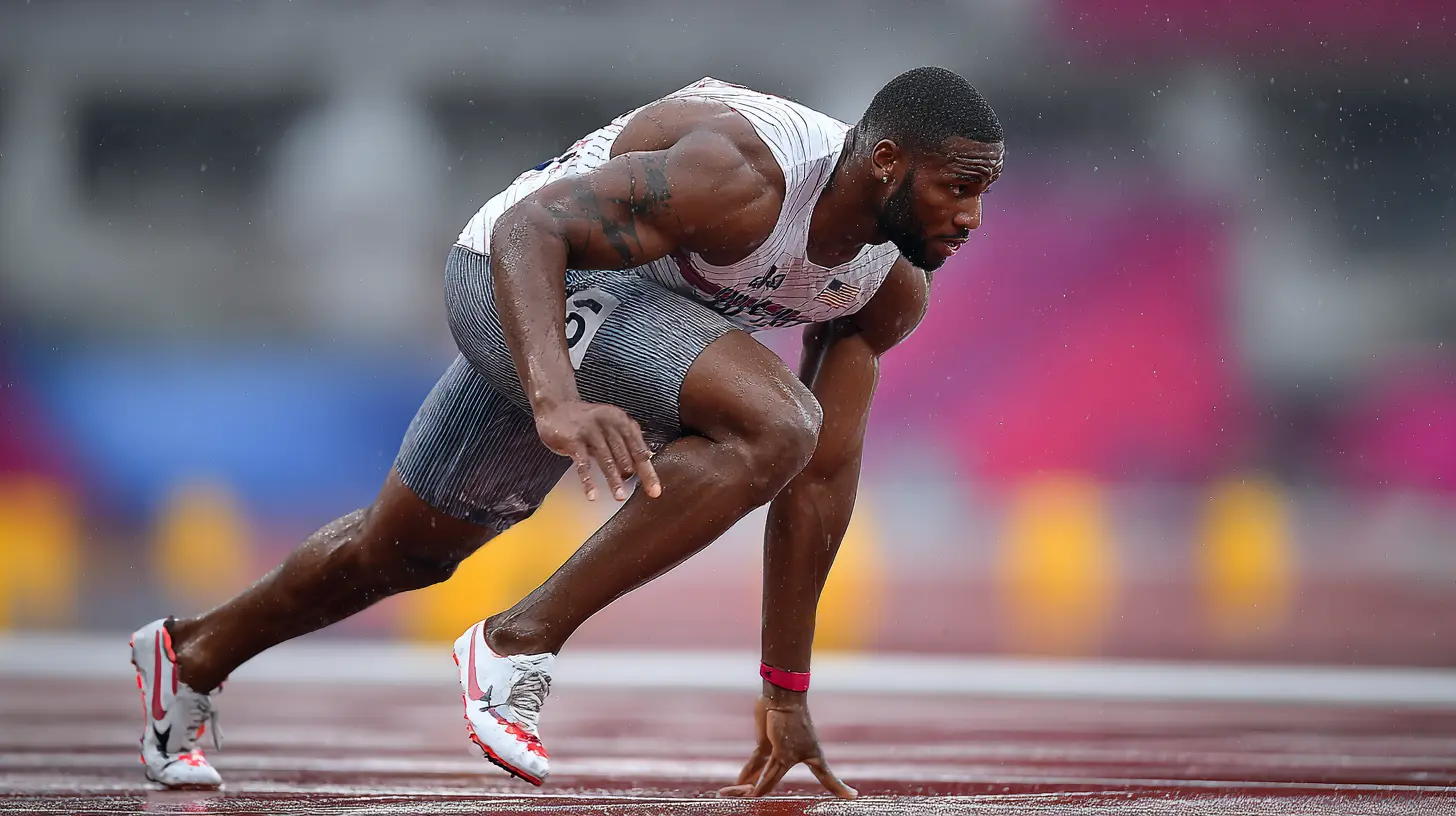
The Anatomy of a Turning Point Season
Before looking at the specifics, it helps to define what a turning point actually is. It is not a breakout. A breakout is a sudden jump in results, often driven by a single variable like a new coach, a technical fix, or a favorable draw. Breakouts are loud and often fragile. Turning points are quieter and more durable. They happen when an athlete's baseline shifts, so that what used to be a great day becomes an average day.That distinction matters because fans and media tend to look for breakouts and miss turning points. A player who finishes fourth, fifth, and third across a season may have had a more significant year than one who won once and missed the cut ten times. Consistency at a higher floor is the real signal. The 2026 season for this athlete should be judged on floor, not ceiling.
There is also a timing dimension. Turning points tend to arrive when three clocks align: the biological clock of physical development, the technical clock of skill acquisition, and the competitive clock of the field around them. When all three point the same direction, a season can carry an athlete further than raw talent alone would suggest. When they conflict, even a gifted athlete can stall.

Where This Athlete Stands Entering 2026
To understand the opportunity, you have to be honest about the starting point. Over the past three seasons, the pattern has been fairly clear. Early-season performances have been strong, often ahead of expectation. Mid-season has brought a dip, usually coinciding with the densest part of the schedule. Late-season results have recovered but rarely reached the early heights.That arc is a classic signature of an athlete whose conditioning and recovery are not yet matched to the demands of a full calendar. The talent is not in question. The capacity to express that talent repeatedly, under travel, pressure, and cumulative fatigue, is the open question. This is not a criticism so much as a diagnosis, and it points directly at what 2026 can resolve.
There is also a technical thread. Observers have noted that the athlete's best performances come when the contest is chaotic and improvisational, and the weaker ones come when structure and repetition are required. That suggests a decision-making style that thrives on instinct but has not yet been fully integrated with discipline. The 2026 season, with its schedule and its stakes, will test whether that integration has happened.
Physical Development and the Age Curve
Age curves are not uniform across sports, and they are not uniform within a sport. Power-dependent athletes often peak earlier than skill-dependent ones. Endurance athletes often peak later. The athlete in question sits in a category where the physical peak tends to arrive in the middle of a career, not at the start. That means 2026 falls squarely in the window where the body can finally support what the mind has been asking of it.The practical implication is that gains in strength and conditioning should now translate more directly into performance than they did three years ago. An athlete at twenty-two can train hard and see modest returns because the body is still building its foundation. An athlete in the middle of a career can train smart and see outsized returns because the foundation is already there. The question is whether the training has been smart.
Technical Maturity and Decision Speed
Technical maturity is often misunderstood as cleaner mechanics. It is really about decision speed. Elite performers do not just execute better. They choose faster, which buys them time to execute. In sports where split seconds decide outcomes, that difference is enormous.For this athlete, the technical growth visible in recent seasons has been less about the shape of the movement and more about the timing of it. When to attack, when to hold, when to absorb pressure, when to commit. These are decisions that used to arrive a beat late. If the trend continues, 2026 is the year those decisions arrive on time, and that changes everything downstream.
Competitive Context and the Field Around Them
No athlete turns a corner in a vacuum. The field matters. In this case, the competitive landscape in 2026 looks unusually open. Several established rivals are entering phases where durability becomes a question. A few younger competitors are rising but have not yet proven they can sustain a full season. That combination creates a window.Windows close. That is the uncomfortable truth. An athlete who is ready when the field is open can build a reputation that carries for years. An athlete who is ready two seasons later may find the window shut. This is not a reason to panic, but it is a reason to treat 2026 as a season of consequence rather than a season of preparation.

The Specific Factors That Make 2026 Different
General trends are useful, but turning points are usually driven by specific, identifiable factors. Here are the ones that matter most for this athlete.A Schedule That Fits the Athlete's Strengths
Scheduling is an underrated variable. Athletes and teams often treat the calendar as fixed, but the reality is that preparation and peaking are choices. The 2026 calendar, as it stands, offers a sequence that suits this athlete's profile better than recent years. The densest stretch comes after a longer build-up, and the most important events fall in a period where the athlete has historically performed well.That alignment is not accidental, and it should be exploited deliberately. The mistake would be to treat every event as equally important. A smarter approach is to identify two or three anchor events and build the season around them, using the rest as development and maintenance. This is standard practice at the highest level, and it is the difference between arriving at a major event fresh and arriving there worn down.
A Training Block That Finally Sticks
Training adaptations take time, often more time than athletes and fans want to admit. A new strength program may show nothing for six months and then produce a step change. A technical adjustment may feel wrong for a full season before it becomes automatic. The athlete in question has been in a multi-year training block that should, by 2026, be producing its returns.The key word is should. Adaptation is not guaranteed. It depends on consistency, on avoiding injury, and on the quality of the feedback loop between athlete and coaching staff. But the timeline fits. If the work has been done, 2026 is when it shows.
Reduced External Pressure
Pressure is a strange variable. It can sharpen performance or crush it, and the difference often comes down to whether the athlete feels watched or supported. Entering 2026, the external pressure on this athlete is lower than it has been in years. Expectations have been recalibrated. The spotlight has moved to others.That is an advantage. Athletes often perform best when they are slightly under the radar, free to compete without the weight of a narrative. The absence of pressure is not a guarantee of success, but it removes a variable that has visibly affected performance in the past.

What Could Go Wrong
Honest analysis requires looking at the downside. Turning points are not automatic, and several things could derail this one.Injury Risk During a Higher-Load Season
Any increase in training load or competitive intensity raises injury risk. This is not a reason to avoid the increase, but it is a reason to manage it carefully. The most common mistake is ramping up too quickly after a good early result. Athletes and teams often chase momentum and overload the body in the process.The better approach is to plan the ramp in advance and resist the urge to add events or training blocks mid-season. Discipline in the calendar is often more valuable than extra work.
Technical Regression Under Pressure
Under pressure, athletes revert to old habits. This is well documented and it is the reason technical changes take so long to consolidate. If the athlete faces a high-stakes moment before the new patterns are fully automatic, there is a real risk of falling back into the old decision-making style.The mitigation is exposure. The more the athlete competes in pressure situations during the early and middle parts of the season, the more likely the new patterns hold when it matters. Avoiding pressure early is a common mistake that backfires later.
The Mental Load of Expectation
Even reduced external pressure can be replaced by internal pressure. An athlete who senses that this is the year may tighten up. The mental side of performance is not soft or secondary. It is a load-bearing element of the whole structure.Managing that load is a skill, and it usually involves routines, support systems, and a clear process focus. Athletes who fixate on outcomes tend to struggle. Athletes who focus on execution tend to thrive. The 2026 season will test which approach this athlete has adopted.
How to Evaluate the Season as It Unfolds
Fans and analysts often judge seasons by trophies. That is a mistake, especially for an athlete in a turning-point year. A more useful framework is to track a few specific indicators.First, look at the floor. What is the worst performance of the season, and how does it compare to previous years? A rising floor is the clearest sign of a turning point.
Second, look at the response to adversity. When something goes wrong, an early exit, a bad draw, a poor start, does the athlete recover in the next event? Resilience is a leading indicator.
Third, look at the pattern within events. Is the athlete stronger late in contests than early? That suggests conditioning and decision-making are improving.
Fourth, look at consistency across the schedule. Are the dips shallower than before? A shallower dip is often more meaningful than a higher peak.
None of these indicators require a trophy to be positive. That is the point. A turning point can happen without a championship, and a championship can happen without a turning point. The distinction matters for anyone trying to understand what is actually happening.
Comparisons and Trade-offs
It is tempting to compare this athlete to others who have made similar leaps. Those comparisons can be useful, but they come with trade-offs.Comparing to a breakout star can create false expectations. Breakouts are often driven by unique circumstances that do not repeat. Comparing to a slow-burn career can be more instructive, because it emphasizes the accumulation of small gains over time.
The trade-off is between patience and urgency. Patience says the process will deliver in its own time. Urgency says the window is open now and must be used. Both are true. The best approach is to hold them together: prepare with patience, compete with urgency.
Another trade-off is between specialization and versatility. An athlete who narrows focus can accelerate development in one area but may become fragile when conditions change. An athlete who stays versatile builds resilience but may develop more slowly. For this athlete, the balance seems to be tilting toward specialization in 2026, which is probably correct given the stage of the career, but it is worth watching.
Practical Takeaways for Athletes, Coaches, and Observers
If you are an athlete in a similar position, the lessons are concrete. Build the season around a small number of anchor events. Protect the floor before chasing the ceiling. Use early-season competitions to test pressure responses, not just results. Keep the training block stable even when results fluctuate, because adaptation lags performance.If you are a coach, the priority is the feedback loop. Make sure the athlete understands why the plan is what it is, because buy-in matters more in turning-point years than in any other. Watch for the urge to over-race after a good result, and hold the line on the calendar.
If you are an observer, resist the temptation to judge the season by a single event. Look at the trend lines. Look at the floor. Look at the response to adversity. These are the signals that separate a turning point from a flash.
Common Mistakes and Misconceptions
The most common mistake is to confuse a turning point with a breakout. They look similar in highlight reels and very different in the data.The second is to assume that a good early result means the work is done. Early results are often noise. The signal comes later.
The third is to overreact to a mid-season dip. Dips are normal, especially in a season that is being used to build. The question is not whether a dip happens but how deep it goes and how quickly the athlete recovers.
The fourth is to treat pressure as purely mental. Pressure interacts with technique, conditioning, and scheduling. Reducing pressure is not just a mindset exercise; it is a planning exercise.
The fifth is to ignore the competitive context. An athlete can have a great season and still finish behind others. That does not mean the season failed. It means the field was strong. Judging performance in isolation from the field is a reliable way to misread what is happening.
The Verdict
The 2026 season is a genuine turning point opportunity for this athlete, not because of hype but because of alignment. The physical timeline fits. The technical work should be maturing. The schedule suits the profile. The competitive field is open. The external pressure is manageable. None of these guarantees success, and several of them could be undone by injury, regression, or poor planning. But the conditions are as favorable as they are likely to be for some time.What makes a turning point is not the season itself but what the athlete does with it. The work has to be done in advance. The decisions have to be made before the pressure arrives. The floor has to be protected while the ceiling is chased. If those things happen, 2026 will be remembered as the year the athlete stopped being a question and started being an answer. If they do not, it will be remembered as another year of near misses. Either way, the season is worth watching closely, and the indicators to track are clear.
all images in this post were generated using AI tools
Category:
Career MilestonesAuthor:

Nelson Bryant