Understanding the Anatomy of a Skateboard: A Complete Breakdown
14 April 2026
Skateboarding is more than just a sport—it's a culture, a lifestyle, and for many, a passion. But before you start cruising down the streets or attempting kickflips, understanding the different parts of a skateboard is crucial. Each component plays a vital role in how the board functions, and knowing their purpose can improve your skills and help you make informed decisions when buying or upgrading your setup.
So, let’s break down the anatomy of a skateboard and see what makes this four-wheeled wonder tick! 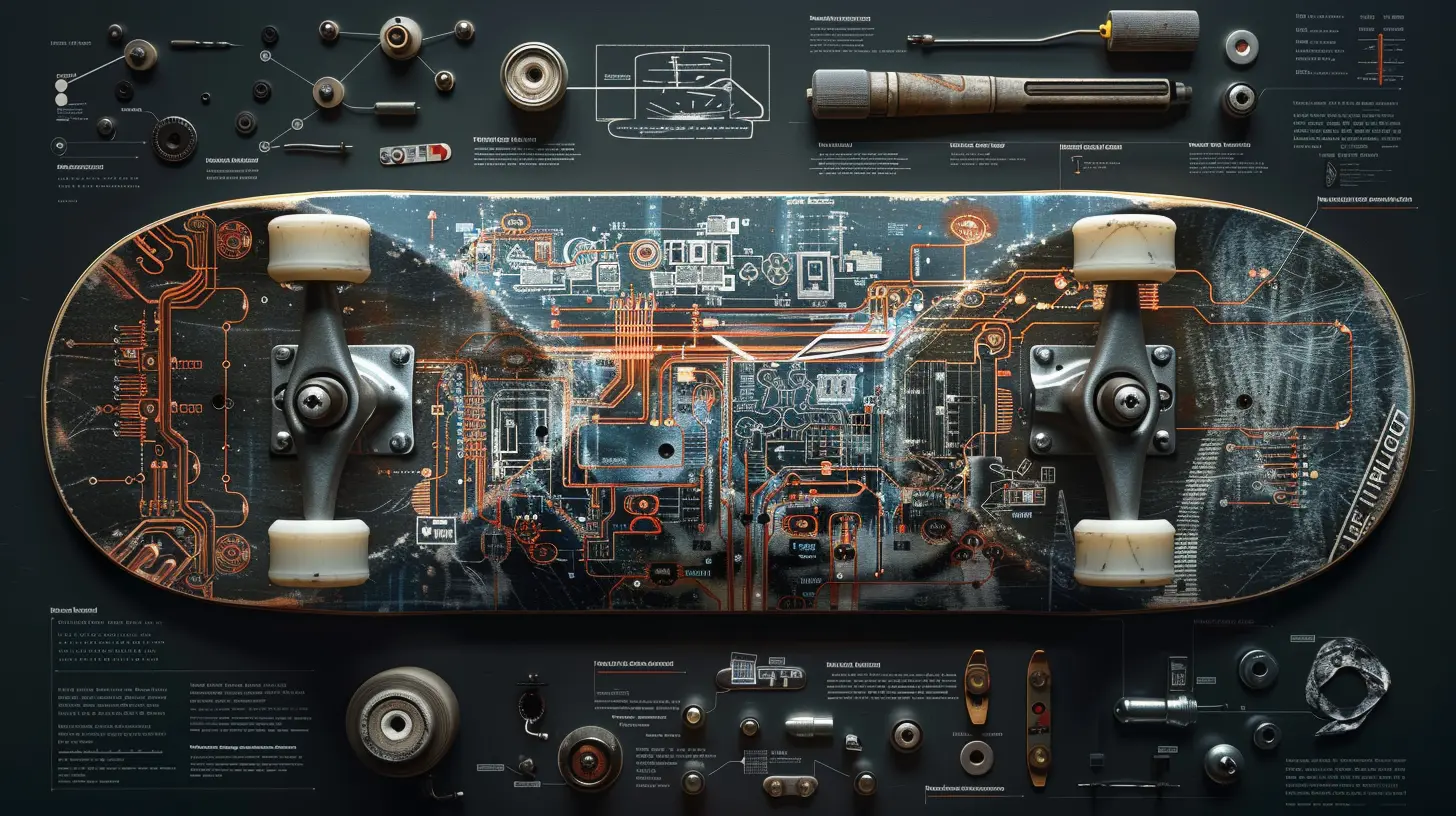
1. The Deck – The Foundation of Your Ride
The deck is the main part of the skateboard—the flat board you stand on. It’s typically made of seven plies of maple wood, giving it the perfect balance between strength and flexibility.Deck Width and Length
Decks vary in size, and choosing the right one depends on your skating style:- Narrow Decks (7.5" - 8") → Ideal for technical tricks, flips, and street skating.
- Wider Decks (8.25" - 9") → Best for transition skating, such as ramps and bowls, due to the added stability.
Most standard skateboard decks measure 28" to 33" in length, and while length affects overall control, width is generally more important when picking a deck.
Concave and Shape
The concave refers to how the board curves between the edges. A deeper concave provides more control for tricks, while a shallower one offers a flatter, more stable surface. Some common deck shapes include:- Popsicle Shape (Symmetrical, ideal for street and park skating)
- Old-School Shape (A wider nose and tail, great for cruising and pools)
If you're just starting, go for a moderately concave deck that provides both comfort and control. 
2. Grip Tape – Your Best Friend for Traction
Grip tape is the sandpaper-like layer applied to the top of the deck. Its purpose? To give you the necessary grip and control over your board. Without grip tape, you’d be slipping off every time you tried a trick!Grip tape comes in various colors, patterns, and even perforations for better ventilation. Whether you prefer a standard black sheet or a custom-cut design, ensuring your grip tape is fresh and clean will maximize performance.
Pro Tip:
If your grip tape gets dirty, use a grip tape cleaner or an old toothbrush with mild soap to keep it fresh.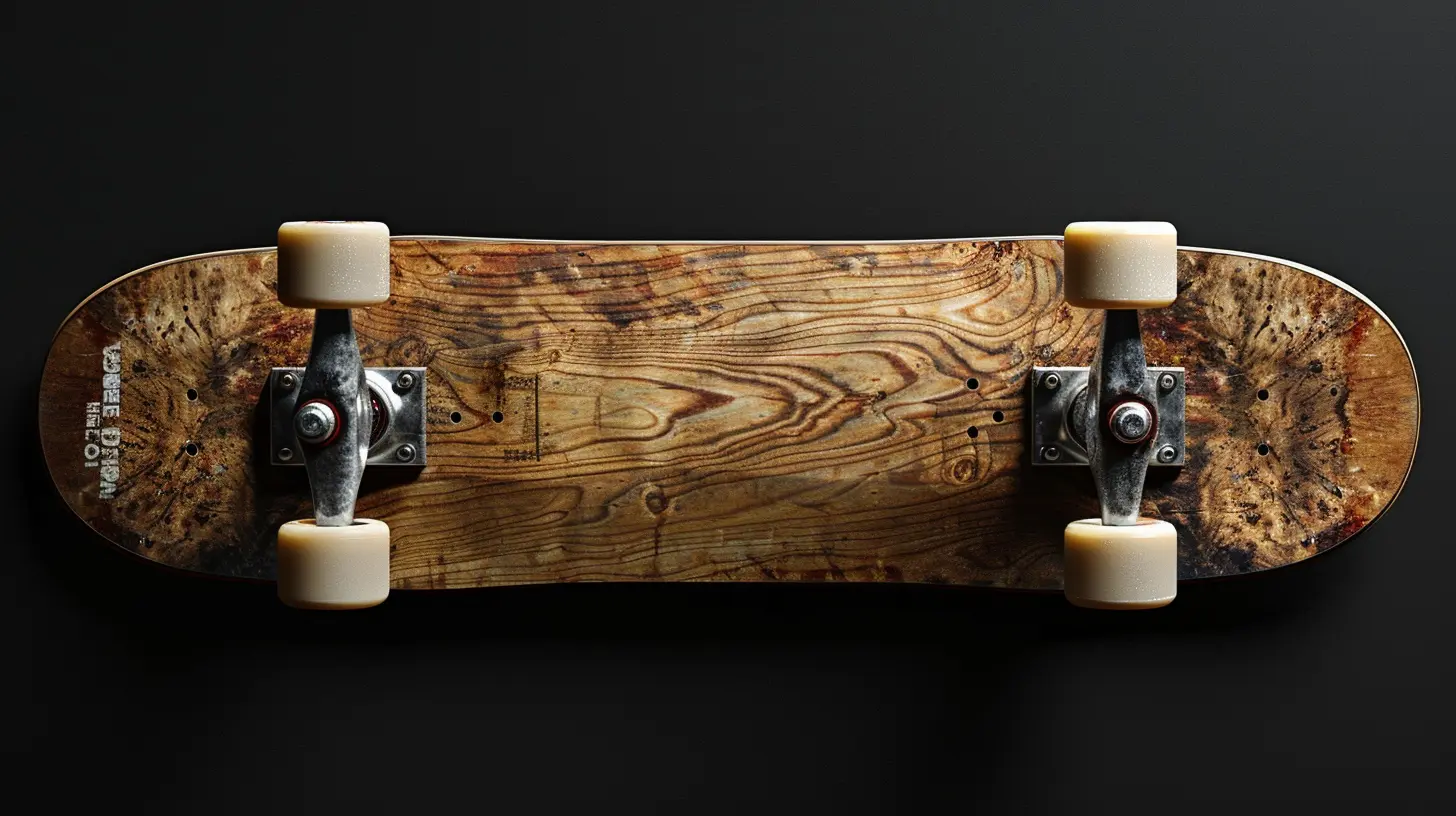
3. Trucks – The Steering Mechanism of Your Board
Trucks are the metal T-shaped components mounted underneath the deck. They connect your wheels to the deck and allow you to turn, grind, and perform tricks.Key Truck Components
Each skateboard truck consists of the following parts:- Baseplate → The part that attaches to the deck.
- Hanger → The large triangular metal piece that supports the axle.
- Axle → The rod that holds the wheels.
- Kingpin → The bolt that holds everything together (also a common breaking point).
- Bushings → Soft rubber rings that control the board's turning ability.
Truck Sizing & Tightness
Choosing the right truck size ensures proper balance:- The truck width should match your deck width.
- Loose trucks = More maneuverability for tight turns.
- Tight trucks = More stability for high-speed skating.
If you love carving and cruising, slightly looser trucks will make your ride feel smoother. But if you’re a fan of high-impact tricks, tighter trucks provide more control. 
4. Wheels – The Heart of Your Skateboard’s Motion
Skateboard wheels come in various shapes, sizes, and hardness levels (durometer). The type of wheels you need depends on your riding style.Wheel Size (Diameter)
- 50-54mm → Small wheels, ideal for technical street skating.- 55-60mm → Medium-sized, suited for park and transition skating.
- 60mm+ → Large wheels, great for cruising and longboards.
Wheel Hardness (Durometer Scale)
Wheel hardness is measured using the A scale, with higher numbers being harder:- 78A-87A → Super soft, great for rough terrain and cruising.
- 88A-95A → Slightly harder, offering a mix of grip and speed.
- 96A-101A → Hard wheels, perfect for skateparks and smooth surfaces.
For street skaters, 99A-101A wheels are the go-to choice since they slide easily for tricks. For cruising down rough roads, go for a softer wheel with more grip.
5. Bearings – The Secret to Speed
Bearings are small metal rings that fit inside the wheels, allowing them to spin smoothly. They come with an ABEC rating, which measures precision:- ABEC 1-3 → Basic, lower-quality bearings.
- ABEC 5 → A good all-around choice for most skaters.
- ABEC 7-9+ → High-speed, precision bearings for serious riders.
However, ABEC ratings aren’t everything. Factors like lubrication and material (ceramic vs. steel) play a bigger role in durability and speed. Ceramic bearings, though pricey, offer a smoother ride and require less maintenance.
Pro Tip:
To keep your bearings fast and smooth, clean them regularly with a bearing cleaner and reapply lubricant.6. Hardware – The Small But Mighty Screws
Skateboard hardware refers to the bolts and nuts that attach the trucks to the deck. While it might seem like a minor detail, using the right hardware ensures that everything stays secure.- Standard size: 7/8" or 1" bolts for most setups.
- Riser pads? → If you add riser pads, use longer bolts (1.25"-1.5").
Some skaters prefer colored hardware to easily differentiate the nose and tail of their board.
7. Riser Pads – The Shock Absorbers
Riser pads are plastic inserts placed between the deck and the trucks. While not always necessary, they serve two main purposes:1. Reduce Wheel Bite → Prevents the wheels from rubbing against the deck during sharp turns.
2. Shock Absorption → Helps cushion impact, making the ride smoother.
Typically, riser pads are more common on cruisers and longboards where larger wheels are used.
Final Thoughts
Your skateboard is more than just a slab of wood with some wheels—each part plays a crucial role in how it performs. Whether you're a beginner picking your first board or a seasoned skater fine-tuning your setup, understanding the anatomy of a skateboard allows you to skate better, maintain your board efficiently, and ultimately, have more fun.So next time you step on your board, you'll know exactly what’s happening under your feet. Now, go skate and enjoy the ride!
all images in this post were generated using AI tools
Category:
SkateboardingAuthor:

Nelson Bryant
Discussion
rate this article
2 comments
Easton Wade
This article provides an insightful look into the various components of a skateboard. By breaking down each part's function and importance, it helps both beginners and seasoned riders appreciate the mechanics behind their boards. A solid resource for anyone looking to deepen their understanding of skateboarding!
July 26, 2026 at 9:00 PM
Nelson Bryant
Thanks for the kind words! I'm glad you found the breakdown helpful for both new and experienced riders.
Cooper Hill
This article offers a clear and concise breakdown of skateboard anatomy, perfect for beginners and enthusiasts alike. Understanding each component helps improve your riding skills and enhances maintenance. A must-read for anyone looking to elevate their skateboarding experience!
April 14, 2026 at 12:21 PM
Nelson Bryant
Thanks for your feedback! I'm glad you found the article helpful for both beginners and enthusiasts. Happy skating!