The Strategy Behind a World Title in 2026
27 April 2026
Let’s be honest—when you hear “World Title in 2026,” your mind probably jumps to a packed stadium, a roaring crowd, and a single athlete or team lifting a gleaming trophy under a shower of confetti. That’s the dream, right? The cinematic climax. But here’s the thing no one tells you: that moment is just the final brushstroke on a canvas that’s been painted in sweat, data, and quiet desperation for years. The strategy behind a world title in 2026 isn’t about luck or raw talent alone. It’s a chess match played at hyperspeed, where every move—from nutrition timing to AI-driven recovery protocols—is a calculated risk. So, grab a coffee (or tea, I won’t judge), and let’s peel back the curtain. What does it really take to win it all in the near future? Spoiler: it’s weirder and more beautiful than you think.

The New Playbook: Why 2026 Is Different From 2016
Remember 2016? LeBron James was chasing a curse-breaking title for Cleveland, and the Olympics in Rio felt like a hangover from a simpler era. Back then, winning a world title meant having a strong coach, a few star players, and a lot of grit. Fast-forward to 2026, and the game has mutated. We’re talking about bio-hacking, real-time neural feedback, and sports psychology that sounds like something out of a sci-fi novel. The strategy isn’t just “work harder”; it’s “work smarter, recover faster, and predict your opponent’s weakness before they even know it exists.”Think of it like this: if 2016 was a boxing match, 2026 is a game of 4D chess where the pieces move on their own. The athlete isn’t just a body anymore—they’re a system. Coaches aren’t just strategists; they’re engineers of human potential. And the title? It’s the reward for mastering chaos.
The Rise of the “Cyborg Athlete”
I’m not talking about literal robots—though, give it a decade, and who knows? In 2026, the world champion will likely be someone who’s optimized their body into a finely tuned machine. Wearable tech isn’t a gimmick anymore; it’s a lifeline. Imagine a runner whose smart insoles measure pressure distribution in real-time, adjusting stride length mid-race. Or a tennis player whose sleeve monitors muscle fatigue and sends alerts to a coach’s tablet before the third set. This isn’t cheating—it’s evolution.But here’s the poetic twist: the best strategy is still human. The tech is just a mirror. It shows you where you’re weak, but it can’t give you the courage to push through pain. That’s where the soul comes in. The 2026 champion will be part poet, part machine—a paradox that makes sports so damn beautiful.

The Data-Driven Mindset: Numbers Don’t Lie, But They Also Don’t Dream
Let’s talk numbers, because 2026 is drowning in them. Every sprint, every pass, every heartbeat is recorded and analyzed. Coaches now use machine learning to simulate thousands of game scenarios before the actual match. They can predict with 80% accuracy how a rival team will react under pressure. Sounds like cheating? No, it’s just preparation on steroids.But here’s the trap: data can turn you into a paranoid mess. You start second-guessing every instinct because “the numbers say otherwise.” The strategy behind a world title in 2026 is knowing when to trust the algorithm and when to trust your gut. It’s like cooking—you follow the recipe, but you also taste the sauce. If it needs more salt, you add it, even if the recipe says no.
The Psychology of “Micro-Moments”
I love this part because it’s so human. In 2026, world champions will train their brains for micro-moments—those half-seconds where a match swings. Think of a soccer player who, in a split second, decides to pass instead of shoot. That decision isn’t random; it’s the result of thousands of hours of cognitive drills. They’re training their amygdala to stay calm while the world screams.You’ve probably felt it—that freeze when pressure hits. Now imagine a competitor who has literally rewired their brain to see pressure as a signal to accelerate. That’s the 2026 edge. It’s not about being tougher; it’s about being more flexible. Like water in a hurricane—it doesn’t fight the wind; it moves with it.

The Secret Sauce: Recovery as a Weapon
Here’s a dirty little secret: most athletes lose titles not because they weren’t good enough, but because they broke down. Injuries, burnout, mental fatigue—these are the silent assassins. In 2026, the strategy flips the script. Recovery isn’t an afterthought; it’s the main event.I’m talking about cryotherapy chambers, hyperbaric oxygen tents, and sleep tracking that rivals NASA. But the real magic? Active rest. Imagine a fighter who spends their off-days doing light yoga and reading poetry. Sounds soft, right? Wrong. They’re recovering their nervous system while their rivals grind themselves into dust. The 2026 champion knows that rest is not laziness; it’s the forge where strength is tempered.
The Lonely Road of the Individual
For individual sports—boxing, tennis, gymnastics—the strategy is even more brutal. You can’t hide behind a team. Every loss is yours alone. In 2026, these athletes will use “solitude training,” where they spend weeks in remote locations with no distractions. No phone, no social media, no excuses. Just them and the craft.Why? Because the world title demands a level of focus that’s almost inhuman. It’s like a monk who renounces everything for a single goal. But here’s the kicker: they’re not miserable. They’ve found joy in the suffering. That’s the paradox—the champion doesn’t hate the grind; they fall in love with it. And that love is the real strategy.

Team Dynamics: The Symphony of Chaos
Now, let’s flip to team sports—football, basketball, rugby. Winning a world title in 2026 is less about individual stars and more about synergy. Think of a jazz band: each musician is brilliant alone, but the magic happens when they improvise together. The same applies to a championship team.Coaches are now using “emotional analytics” to measure team chemistry. They track who talks to whom, who celebrates together, who argues. If the data shows a rift, they intervene before it festers. It’s like tending a garden—you pull the weeds before they choke the flowers.
The Role of the “Anti-Star”
Here’s a wild concept: the 2026 champion team might not have a superstar. Instead, they’ll have a dozen players who are “anti-stars”—people who don’t need the spotlight but nail the fundamentals. Think of a soccer team where every player can defend, pass, and score. No divas, no egos. Just a well-oiled machine.It sounds boring, but it’s devastating. Because when the pressure hits, the anti-star doesn’t crumble. They just do their job. And that consistency is what wins titles. It’s like a river—it doesn’t roar; it just keeps flowing, wearing down the rocks.
The Fan Factor: Why the Crowd Still Matters
In an age of virtual reality and hologram broadcasts, you’d think the crowd doesn’t matter. Wrong. The strategy behind a world title in 2026 includes managing the noise. Literally. Athletes train with simulated crowd sounds—from cheers to boos—to build mental armor. They learn to tune out the roar or use it as fuel.But here’s the twist: the best champions don’t ignore the crowd; they absorb it. They turn the energy into performance. It’s like a surfer riding a wave—you can’t control the ocean, but you can choose how to ride it. The 2026 champion will be a master of that flow.
The Silent Revolution: Mindfulness in the Heat
I’ve saved the best for last. The most underrated strategy in 2026 is mindfulness. Sounds hippie-dippie, right? But hear me out. When you’re down by two goals with five minutes left, your brain floods with cortisol. You panic. You make bad choices. The mindful athlete, however, breathes. They center themselves. They see the moment as it is, not as their fear paints it.This isn’t woo-woo; it’s neuroscience. Studies show that 10 minutes of mindfulness a day can improve decision-making under pressure by 40%. That’s a game-changer. The 2026 champion will be the one who can stay calm while the world burns. And that calm is a superpower.
The Final Countdown: What It All Means
So, what’s the strategy behind a world title in 2026? It’s a mosaic—data, guts, recovery, team chemistry, mindfulness, and a dash of poetry. It’s not about being the strongest or fastest; it’s about being the most adaptable. The champion will be the one who can dance with chaos, who sees every setback as a lesson, and who loves the process more than the prize.Look, I’m not saying it’s easy. It’s brutally hard. But that’s what makes it beautiful. The 2026 world title won’t be won on the field alone; it’ll be won in the quiet hours before dawn, in the data spreadsheets, in the therapist’s office, and in the heart of an athlete who refused to quit. And when that trophy is lifted, it won’t just be a victory—it’ll be a story. A story of strategy, sacrifice, and the sublime madness of human potential.
So, who’s ready to write that story? Because 2026 is coming, and it’s going to be legendary.
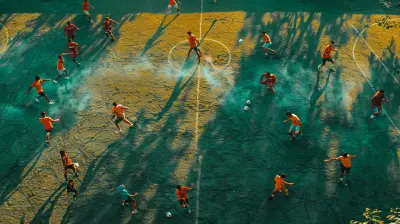
all images in this post were generated using AI tools
Category:
Career MilestonesAuthor:

Nelson Bryant
Discussion
rate this article
2 comments
Kiera Vasquez
Winning the 2026 title requires bold moves and calculated risks. It's not just about skill; it's about seizing every opportunity.
August 20, 2026 at 3:40 AM
Kael Martin
Success in 2026 will hinge on adaptability, teamwork, and resilience. Embracing diverse strategies will not only elevate performance but also inspire future generations.
April 27, 2026 at 1:04 PM
Nelson Bryant
Absolutely. Adaptability and teamwork are key. Diverse strategies will set us apart and pave the way for future success.