The Strategic Evolution of Teams Heading into the 2026 Handball World Championships
10 October 2026
The 2026 Handball World Championships will not be won by the team with the most talented roster alone. It will be won by the program that reads the shifting tactical landscape fastest and adapts its structure, tempo, and squad management before the tournament even begins. International handball has been changing steadily since the mid 2010s, and the next world championship cycle is shaping up to reward a specific kind of strategic thinking: flexible, data informed, and psychologically durable.
This article breaks down how elite national teams are evolving their approach on the road to 2026. It covers tactical trends, roster construction, defensive systems, goalkeeper strategy, the growing role of analytics, and the organizational decisions that separate consistent contenders from one tournament wonders.
Why 2026 Is a Genuine Inflection Point
Every world championship has its own character. Some are defined by a single dominant generation. Others are defined by rule interpretations, tournament format, or scheduling density. The 2026 edition sits at the intersection of several converging pressures.First, the international calendar has become more congested. Club competitions in Europe demand more from top players than they did a decade ago, which means national team coaches have fewer meaningful training blocks. Strategic preparation has shifted from long camps to short, high density micro cycles. Teams that cannot transmit complex tactical ideas quickly are at a disadvantage.
Second, the player pool has become more globally distributed. Traditional powers no longer have a monopoly on elite physical preparation or tactical education. Smaller handball nations increasingly produce players who train in top European leagues from a young age, which compresses the talent gap.
Third, refereeing interpretations around contact, passive play, and the advantage rule continue to nudge attacking and defending behavior. Coaches who anticipate these shifts and build systems that exploit them gain a quiet edge.
The result is a tournament environment where strategic clarity matters more than raw star power. That is the central theme of this cycle.
The Tactical Pendulum: From Set 6-0 to Hybrid Defenses
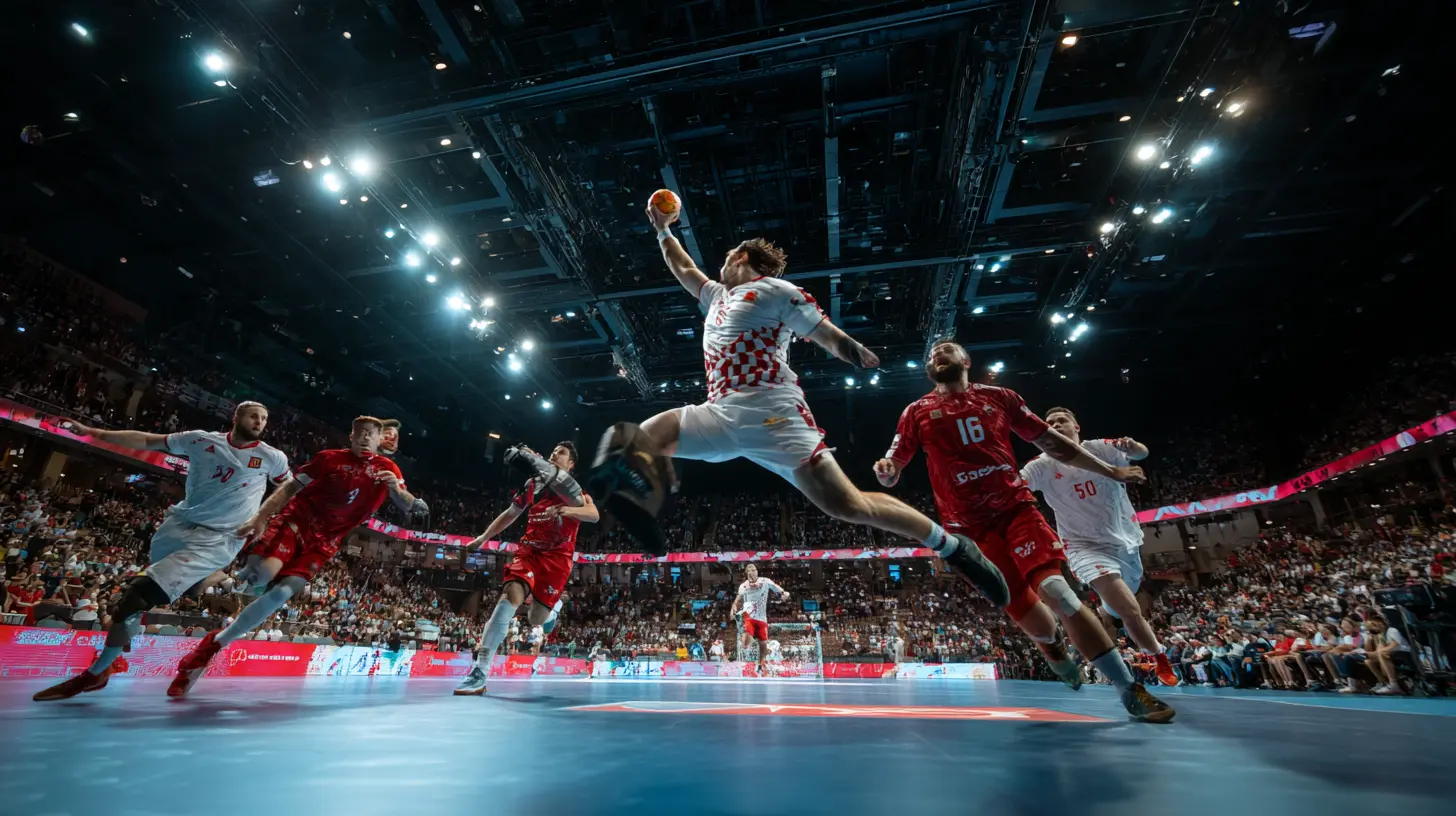
For years, the 6-0 defense was the default setting for most national teams. It protects the middle, conserves energy, and forces opponents into low percentage outside shots. It still works, but it has a cost: against modern shooting backcourts, a static 6-0 concedes too many clean nine meter attempts.Why Hybrid Defenses Are Taking Over
Hybrid defenses, typically variations of 5-1, 3-2-1, or situational 4-2, are being used less as a permanent identity and more as a tactical weapon within games. The logic is simple. Modern attackers are trained to read a single defensive shape and exploit its gaps. If the shape changes mid possession, or changes between possessions, the attacking rhythm breaks.Consider a team that defends in 6-0 for the first ten minutes, then jumps into 5-1 for a two minute burst. The opposing playmaker has to recalibrate passing lanes, pivot positioning, and the timing of backcourt entries. Even a small disruption can produce two or three turnovers, which at international level often decides a match.
The trade off is real. Hybrid defenses demand more communication, more lateral footwork, and more defensive IQ. A poorly executed 5-1 is worse than a solid 6-0 because it opens the middle. That is why coaches typically introduce hybrids only with veteran defensive units, or with players who have spent years in the same club system.
When to Use a Hybrid and When to Avoid It
Use a hybrid when:- The opponent relies on a single dominant playmaker who struggles against changing looks.
- Your team has at least two mobile defenders who can hold the front line without fouling.
- You need a momentum swing and are willing to accept some risk.
Avoid a hybrid when:
- Your goalkeeper is already under heavy pressure and needs a predictable wall in front.
- Your defenders are in foul trouble or fatigue is visible.
- The opponent has a strong pivot who can exploit the space behind an aggressive front line.
The most successful teams in this cycle will likely treat defense as a menu, not a religion.
Attack: The Rise of Positionless Backcourts
Attacking handball has been moving toward what many coaches call positionless backcourt play. Instead of rigid left back, center back, and right back roles, teams are developing players who can operate across all three positions and even slide into the wing.Why This Matters for 2026
Defensive systems are built to key on specific threats. If your left back is always the shooter and your center back is always the distributor, defenders can pre rotate and cheat. Positionless backcourts force defenders to make decisions in real time, which increases the chance of errors.There is a physical dimension too. Players who can shoot from both sides and pass off either hand are harder to close down. They also allow coaches to run quicker transitions, because the same player can initiate and finish.
The cost is development time. Positionless players are rare because most clubs specialize them early. National teams that identify and nurture these players in their early twenties gain a structural advantage that is difficult to copy late in a cycle.
Practical Advice for Coaches
- Train backcourt players on both sides during every camp, even if it feels inefficient.- Use small sided games that force players to switch positions every few minutes.
- Reward decision making over execution in training. A missed pass from the correct read is better than a completed pass from a bad one.

Goalkeeping as a Strategic Asset, Not a Wild Card
Goalkeepers have always mattered. What is changing is how systematically teams prepare them.The Two Goalkeeper Model
More national teams are moving toward a clear two goalkeeper rotation, where each keeper has a defined role. One might be the starter who plays the first 20 minutes and the last 10. The other might be a specialist for seven meter throws, fast breaks, or specific opponent profiles.This is not new in club handball, but at national level it requires a level of role acceptance that can be politically delicate. Players who see themselves as number one may resist a shared arrangement. Coaches who communicate the logic early, and who back it with data, tend to get buy in.
Why Data Changes the Conversation
Shot charts and entry angle data allow coaches to show a goalkeeper exactly where an opponent shoots from and with what frequency. A keeper who knows that a particular left wing shoots low on the near post 70 percent of the time can position half a step earlier. That half step is often the difference between a save and a goal.The practical recommendation is straightforward: build a goalkeeper preparation dossier for every likely opponent, and rehearse the key scenarios in training. The teams that do this consistently tend to outperform their raw save percentage expectations.
Roster Construction: Fewer Specialists, More Versatile Athletes
A 16 or 18 player roster at a world championship has to survive seven or more matches in roughly two weeks. Fatigue accumulates. Injuries happen. Suspensions happen.The Case for Versatility
Historically, rosters were built with clear specialists: a defensive pivot, an offensive pivot, a wing who only plays one side, a backcourt shooter who never defends. That model still exists, but it is being challenged.Versatile players solve multiple problems at once. A defender who can also play wing gives the coach flexibility during foul trouble. A backcourt player who can cover pivot in a small lineup creates mismatches.
The downside is that versatility can dilute excellence. A player who is good at four things may not be great at any of them. In knockout matches, you often need greatness in at least one dimension.
A Balanced Approach
The most credible model heading into 2026 appears to be a hybrid roster:- Six to eight core players who are elite in a defined role.
- Four to six versatile connectors who cover multiple positions.
- Two to three developmental players who may not play much but gain experience for the next cycle.
This structure balances peak performance with resilience. It also sends a clear message to younger players that the pathway is real.
The Analytics Layer: Useful, But Not a Magic Wand
Analytics in handball has matured. Teams now routinely track shot locations, save percentages by zone, fast break efficiency, and seven on six conversion rates.What Analytics Does Well
- Identifies inefficiencies that the eye misses, such as a wing who shoots poorly from the right side but well from the left.- Supports goalkeeper preparation and defensive matchups.
- Helps manage minutes by quantifying fatigue related drop offs.
What Analytics Does Poorly
- Captures psychological momentum, which is enormous in handball.- Predicts how a specific referee crew will interpret contact.
- Replaces the coach's feel for when a timeout will change the game.
The best programs treat analytics as a decision support tool, not a decision maker. They combine data with video, live observation, and player feedback. Teams that lean too heavily on numbers often miss the human variables that decide tight matches.
Preparation Logistics: The Hidden Edge
Because training time is scarce, how a team uses its limited camp days is a strategic decision in itself.Prioritize Shared Mental Models
Instead of installing ten new plays, successful teams often focus on two or three core principles and drill them until they are automatic. This reduces cognitive load during matches, when stress is high.Simulate Match Conditions
Friendly matches are useful, but they rarely replicate the pressure of a world championship. Some teams now use internal scrimmages with modified rules, such as playing with a one goal deficit and two minutes left, to build composure.Manage Travel and Recovery
The 2026 tournament will likely involve significant travel between venues or at least between hotels and arenas. Teams that plan recovery protocols, sleep schedules, and nutrition in advance gain a marginal but real advantage over two weeks.
Common Mistakes and Misconceptions
Mistake 1: Copying the Champion
Every cycle, coaches try to replicate the system of the previous world champion. This rarely works because the champion's system was built around specific players. The strategic lesson is to copy principles, not blueprints.Mistake 2: Overloading the Playbook
More plays do not equal more goals. In fact, too many plays slow decision making. Simplicity, executed at speed, beats complexity executed slowly.Mistake 3: Ignoring the Pivot Position
The pivot is often undervalued in strategic planning. A dominant pivot forces defenses to collapse, which opens shooting lanes. Teams that neglect pivot development often struggle against compact defenses.Misconception: Defense Wins Championships
Defense matters enormously, but the modern game rewards teams that can score in transition. A great defense without a fast break threat leaves points on the table. The real formula is defense that creates offense.What to Watch in the Build Up to 2026
- Which teams experiment with hybrid defenses in qualifying and friendly matches.- How coaches manage goalkeeper minutes and whether two keeper systems become standard.
- Whether positionless backcourt players appear in more national team squads.
- How teams handle the balance between veteran leadership and younger legs.
- Which federations invest in analytics staff and sports science support.
Final Thoughts
The 2026 Handball World Championships will reward programs that treat strategy as a living process. Tactical flexibility, roster versatility, goalkeeper preparation, and disciplined use of data will separate the semifinalists from the rest. None of these elements is glamorous on its own. Together, they form the quiet architecture of a contender.Teams that cling to a single identity, or that mistake talent for strategy, will likely find themselves on the wrong side of a two goal margin. Teams that adapt will give themselves a chance to play for a medal.
all images in this post were generated using AI tools
Category:
Upcoming TournamentsAuthor:

Nelson Bryant