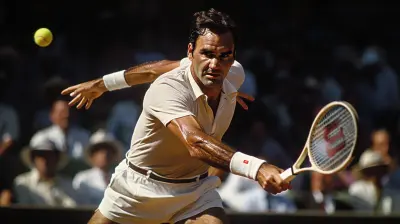
The Role of the Target Man in Modern Football
2 December 2025
Football has evolved dramatically over the years. From the fancy footwork of playmakers to the high-pressing tactics of elite teams, every role on the pitch has seen big changes. But one role that often flies under the radar is the target man—a position that has been both praised and criticized.
In an era dominated by tiki-taka and false nines, does the traditional target man still have a place in modern football? Absolutely. Let’s break down why this role remains crucial and how it has adapted to fit today’s fast-paced game. 
Who Is a Target Man in Football?
The target man is typically a strong, tall, and physically imposing striker who can hold up play, win aerial duels, and bring teammates into the game. Think of classic strikers like Didier Drogba, Olivier Giroud, and Zlatan Ibrahimović—players who thrived by using their physicality rather than just pace.While they may not always be the fastest on the pitch, their main job is to act as a focal point for attacks. Whether it's bringing the ball down from a lofted pass, outmuscling defenders, or nodding down a header for an onrushing midfielder, the target man is a team’s go-to option when direct play is needed.
Evolution of the Target Man in Football
The Classic Era: Pure Physicality
In the past, the target man was purely physical. Teams looking for a direct approach would rely heavily on long balls, hoping their towering striker could either score or lay it off for a teammate.For example, during the late 90s and early 2000s, strikers like Alan Shearer and Niall Quinn were traditional target men who were expected to bully defenders, win headers, and link up play.
The Modern Era: More Than Just Strength
Football has changed significantly, and so has the role of the target man. Today, it's not enough to just be big and strong. Modern target men are expected to have decent technical ability, good link-up play, and an ability to fit into dynamic systems.Look at players like Karim Benzema and Harry Kane—both possess aerial ability and physical presence, but they’re also excellent passers and dribblers. This new breed of target men contributes in multiple ways, acting as playmakers and goal-scorers rolled into one.
The Key Responsibilities of a Target Man
1. Hold-Up Play
The ability to control the ball under pressure and lay it off to teammates is one of the most crucial jobs of a target man. When a team is struggling to break down a compact defense, they can rely on their striker to hold the ball and wait for support.This is especially important for teams that play with wingers who thrive on quick passing or overlapping full-backs.
2. Aerial Superiority
A target man is often the most dominant aerial player on the pitch. They win headers from goal kicks, cross-field passes, and set-pieces. Not only does this help in attack, but it’s also useful defensively when defending corners or long balls.3. Link-Up Play
Modern football demands more from strikers than just goal-scoring. A great target man connects the midfield with the attack, often dropping deep to create space for teammates.Players like Harry Kane excel at this, regularly dropping into midfield and spraying passes to wingers or overlapping full-backs.
4. Goal-Scoring Ability
At the end of the day, a striker still needs to put the ball in the back of the net. Whether it’s through headers, volleys, or powerful strikes, a great target man must capitalize on the chances created.5. Pressing and Defensive Contributions
Unlike in the past, modern football requires strikers to contribute defensively. Pressing from the front is key, and target men are often asked to hassle defenders, force mistakes, and win the ball high up the pitch.
Why the Target Man Is Still Relevant Today
Breaking Down Deep Defenses
In an era where many teams opt for compact defensive setups, breaking through a low block can be frustrating. A strong target man can provide an alternative route to goal by winning aerial duels and offering an outlet for long balls or crosses.Plan B for Attacking Teams
Even the best teams in the world sometimes struggle to break down stubborn defenses. Having a target man as a backup plan allows teams to mix things up when their usual passing game isn’t working.Take Chelsea’s Olivier Giroud, for instance. He wasn't always the first-choice striker, but whenever Chelsea needed a different approach, Giroud’s hold-up play and aerial ability gave them an edge.
The Rise of Hybrid Strikers
The best modern strikers blend the qualities of a target man with those of a complete forward. Players like Erling Haaland and Romelu Lukaku combine strength, speed, and technique, making them hard to defend against.These hybrid target men are not just tall and strong—they are also mobile, dynamic, and capable of scoring from various positions.
The Future of the Target Man
With football constantly evolving, will the traditional target man disappear? Unlikely. While the role has changed, its importance remains.Coaches are always looking for tactical flexibility, and having a powerful forward who can hold up play, win aerial battles, and provide a physical presence is an asset.
In fact, teams are now developing younger players with a blend of physicality and modern technical ability. Strikers are no longer just poachers or aerial specialists—they are all-rounders who can adapt to multiple playing styles.
Final Thoughts
The target man may not always be the flashiest player on the pitch, but they are often one of the most important. Whether playing the classic role of bullying defenders or the modern version that blends technique and strength, they continue to be valuable assets to their teams.So, next time you watch a match and see a striker holding up the ball under pressure, laying off a perfect pass, or powering home a header, remember—the target man isn’t dead. It’s just evolved into something even greater.
all images in this post were generated using AI tools
Category:
TacticsAuthor:

Nelson Bryant
Discussion
rate this article
2 comments
Beatrix Wallace
This article effectively highlights the evolving role of the target man in modern football. While traditional traits remain important, adaptability and mobility are now essential for success in the dynamic attacking play of today's game.
December 25, 2025 at 3:56 AM
Nelson Bryant
Thank you for your insights! I completely agree—adaptability and mobility are crucial for target men to thrive in today's fast-paced game.
Malia McTiernan
Target men: because sometimes you just need a human wall!
December 2, 2025 at 1:15 PM
Nelson Bryant
Absolutely! The target man's physical presence can provide crucial support in attack and help maintain possession.