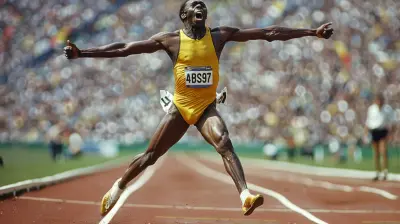
World Championships: When Experience Trumps Youth
4 March 2026
In the world of sports, there's an enduring debate that never seems to lose steam—does youthful energy beat years of experience, or does maturity and mental stamina win when it counts the most? Nowhere is this tug-of-war more visible than at the World Championships across various sports. Whether it's on the track, in the pool, or across a tennis court, the consistent storyline that plays out year after year is that experience often has the last laugh. Let's dive into why this happens, how veterans keep dominating the big stage, and what that means for the bright-eyed newcomers looking to shake up the status quo.

Why World Championships Are a Different Beast
Before we even get into who’s got more gray hair and who’s still fresh out of college, let’s make one thing crystal clear—the World Championships aren’t your average competition. They’re high stakes. Every performance is magnified, nerves are frayed, and the pressure? Off the charts.Here, the mental game levels up. It's not just about who can jump higher or run faster on paper. It's about who can handle the weight of millions of eyes watching, the noise, the expectations, and the potential legacy on the line. And this is where the vets usually shine.

The Power of Experience: Hard Lessons, Big Wins
Let’s paint a picture. A rookie lines up next to a world-renowned veteran. The rookie might have the better season record, maybe even broke a few national records this year. But when the lights are blinding and the world’s tuned in, sometimes, that edge slips.Experience gives athletes something that stats can't measure—composure. The kind of calm under pressure that only comes from having been there before, from having failed before, and from knowing that one bad moment doesn’t define everything.
Think about Serena Williams in her prime, still taking down younger, faster players with sheer mental strength and court craft. Or Usain Bolt, cool as a cucumber before a 100m final, while younger athletes stumbled during false starts from nerves. These are not flukes; these are the by-products of experience.

Sports Where Age Really Is Just a Number
1. Tennis - The Ageless Game
Tennis has been a poster child for seasoned champions. Roger Federer, Rafael Nadal, and Novak Djokovic didn’t just win in their 20s—they dominated well into their 30s. Djokovic, for instance, clinched multiple Grand Slam and World Championship titles past the age of 33, defeating players nearly a decade younger.Why? Because the game, at the elite level, isn’t just about firepower. It’s chess. Strategic placement, reading your opponent, enduring long rallies, and mental warfare. That comes with time.
2. Boxing and MMA - Ring IQ Over Raw Power
In combat sports, you’d think youth would always have the upper hand, right? Faster reflexes, more stamina, quicker recovery. But reality says otherwise. Fighters like Manny Pacquiao and Glover Teixeira proved that experience, or as fighters call it, “ring IQ”, often makes the difference. Positioning, timing, and the ability to remain calm in the chaos separates champions from contenders.Experience teaches fighters how to conserve energy, pick their shots, and survive dangerous situations that would rattle a rookie. It's like playing poker where the stakes are broken bones.
3. Athletics - The Longevity of Champions
Track and field sports often see athletes peaking in their late 20s and early 30s. That’s because winning a World Championship isn’t just about natural talent but about mastering form, diet, training cycles, and recovery. Take Allyson Felix, for instance—she picked up medals across multiple World Championships even after becoming a mother.That kind of success doesn’t come from talent alone. It comes from knowing your body, pacing your season, and peaking at the right time—all hallmarks of experience.
4. Golf – A Game for the Patient
Patience is a virtue, especially in golf. It’s one of the few sports where players often reach their peak later in life. Whether you look at Phil Mickelson winning majors in his 50s or Tiger Woods making comebacks after injuries and surgeries, it’s clear that golf rewards the wise.In the World Championships of golf, experience is almost a prerequisite. Reading greens, making pressure putts, managing mental fatigue during four-day tournaments—these are skills honed over decades, not seasons.

The Mind Game: The True Battlefield
At the World Championship level, the difference between the top 10 performers is usually razor-thin. Physically, they’re all in incredible shape, and technically, they’re nearly flawless. So what actually separates the winners from the others? The six inches between the ears.Mental toughness is built through years of setbacks, close losses, and comebacks. Veterans have faced these battles. They know how to reset after a bad start. They know how to slow things down when everything feels like a blur. It's like driving in the rain—you've got to know when to brake and when to hit the gas. Youth often presses too hard or freezes up, while experience glides through the storm.
Age Is Not a Limitation—It’s a Strategy
Let’s flip the script quickly. Experience doesn’t mean someone’s past their prime. It’s a tactical advantage. Older athletes shift their training to avoid injuries, optimize their schedules to peak at the right times, and focus more on recovery and mental conditioning.Today’s seasoned athletes aren’t dragging their bodies around—they're fine-tuned machines. They’ve got access to better nutrition, sports science, and support systems. So when they show up at a World Championship, they’re not just hoping to hang on—they’re there to win.
The Youth Factor—Not to Be Ignored
Now, let's not throw shade at the younger generation. Youth brings unpredictability and flair. They often introduce new styles, techniques, and energy to the game. They’re hungry. They don't carry the burden of past losses.But sometimes, that energy translates to errors under pressure. World Championships are about consistency, decision-making, and resilience. Traits that, more often than not, come with time.
That said, some young guns crash through the glass ceiling and take down the seasoned warriors. But when they do, it’s usually because they’ve matured quickly or have exceptional mental strength—something you’d typically expect later in a career.
Veteran Comebacks: When Legends Refuse to Retire
One of the most beautiful stories in sports is when a seasoned athlete makes a comeback, and boy, do we love to watch it unfold. These are tales of grit, redemption, and passion. They remind us that heart and experience can still take center stage even when the calendar tries to say otherwise.Athletes like Tom Brady in the NFL or Simone Biles returning to gymnastics after time off exemplify this. These aren't just athletes—they're storytellers. And every competition is a new chapter written with wisdom.
What Younger Athletes Can Learn
It’s no secret—youth tends to look at experience with a bit of side-eye, thinking it's outdated or too conservative. But watch any major championship and you’ll notice something—many of the young stars who succeed emulate or train with older champions. Why? Because they know there’s so much to learn.From pacing a race to managing media attention, to recovering after a loss—these aren't skills you can pick up in a YouTube tutorial. Experience, in this context, is the ultimate coach.
Final Whistle: Who Really Wins?
So, when it comes to World Championships, who truly has the edge? If we had to pick, we'd bet on experience—most of the time. Sure, youth wins some battles. There’s always an underdog story waiting to happen. But when the stakes are sky-high, and the pressure mounts, the ones who’ve been through the fire before often walk away with the gold.It’s not that youth isn’t incredible—it’s game-changing. But experience? That’s game-winning.
Key Takeaways
- World Championships test not just physical strength, but mental toughness.- Experience translates to better composure, strategy, and decision-making under pressure.
- Sports like tennis, boxing, golf, and athletics show the value of seasoned athletes.
- Young athletes bring energy but can lack consistency in high-stress scenarios.
- Legendary comebacks highlight how experience continues to defy age.
At the end of the day, age is just a number. But experience? That's an entire playbook.
all images in this post were generated using AI tools
Category:
World ChampionshipsAuthor:

Nelson Bryant
Discussion
rate this article
2 comments
Myles Benton
In high-stakes competitions, seasoned athletes often leverage their experience to navigate pressure, proving that wisdom can outshine raw talent.
April 13, 2026 at 11:08 AM
Nelson Bryant
Absolutely, experience often makes the difference when pressure is on. It's fascinating how seasoned athletes can turn challenges into opportunities.
Hawk Sharpe
Experience guides; youth ignites. Balance is key.
March 10, 2026 at 4:34 AM
Nelson Bryant
Thank you! Striking the right balance between experience and youthful energy is indeed essential for success in competitions.