The Origins of World Championship Competitions
3 July 2026
Have you ever wondered where all this madness started? I’m talking about the obsession with titles, medals, and being called “the best in the world.” From cheering for our nation at the World Cup to staying up late to watch the Olympics, world championships have a strange way of uniting us—and stressing us out. But how did they even start? Who came up with the idea of one nation or athlete standing above the rest?
In this deep dive, we’ll journey through time and trace the fascinating origins of world championship competitions. Grab a snack, sit back, and let’s unravel this incredible global phenomenon together.
What Makes a Competition a "World Championship"?
Let’s first get on the same page. A world championship isn’t just about trophies or fancy uniforms. What makes a competition truly global is simple: it brings together the best from all over the planet. We're talking about top-level athletes or teams, representing their countries, competing on an international stage.So whether it’s football, boxing, chess, or curling (yes, even curling!), a world championship is the pinnacle. It's where legacies are made and dreams are either realized or crushed.
But this idea didn’t just poof into existence one day. Nope—it evolved over centuries, deeply tied to our love for competition, national pride, and the universal desire to be the best.
Ancient Roots: Where The Spirit Of Competition Began
Believe it or not, world championships trace their roots way back to ancient civilizations. Think way before YouTube highlights and fantasy leagues.The Olympic Games of Ancient Greece
Let’s rewind to 776 BC—yep, over 2,000 years ago! That’s where we find the first recorded Olympic Games in Olympia, Greece. These weren’t exactly “world” championships in the sense we know today, but they were the closest thing the ancient world had.Athletes from different city-states of Greece competed in events like wrestling, chariot racing, and long-distance running. The goal? Glory, pride, and a lifetime of bragging rights. Sound familiar?
Even back then, the games were more than just sport—they were about honor, religion, and human excellence. Think of them as the ancient version of today’s Olympic Games, just with more togas and less Twitter.
The Birth of Modern International Competitions
Fast forward to the late 19th century, and the world was changing fast. Countries were becoming more connected through travel and communication, so naturally, sports followed suit.The Revival of the Olympics
In 1896, a Frenchman named Pierre de Coubertin had a wild idea—why not bring back the ancient games on a global scale? And just like that, the modern Olympic Games were born in Athens. It was a historical moment that laid the groundwork for tons of other world championships.The spirit of international competition was alive again, only this time, there were officials, standard rules, and—thankfully—less nudity than in Ancient Greece.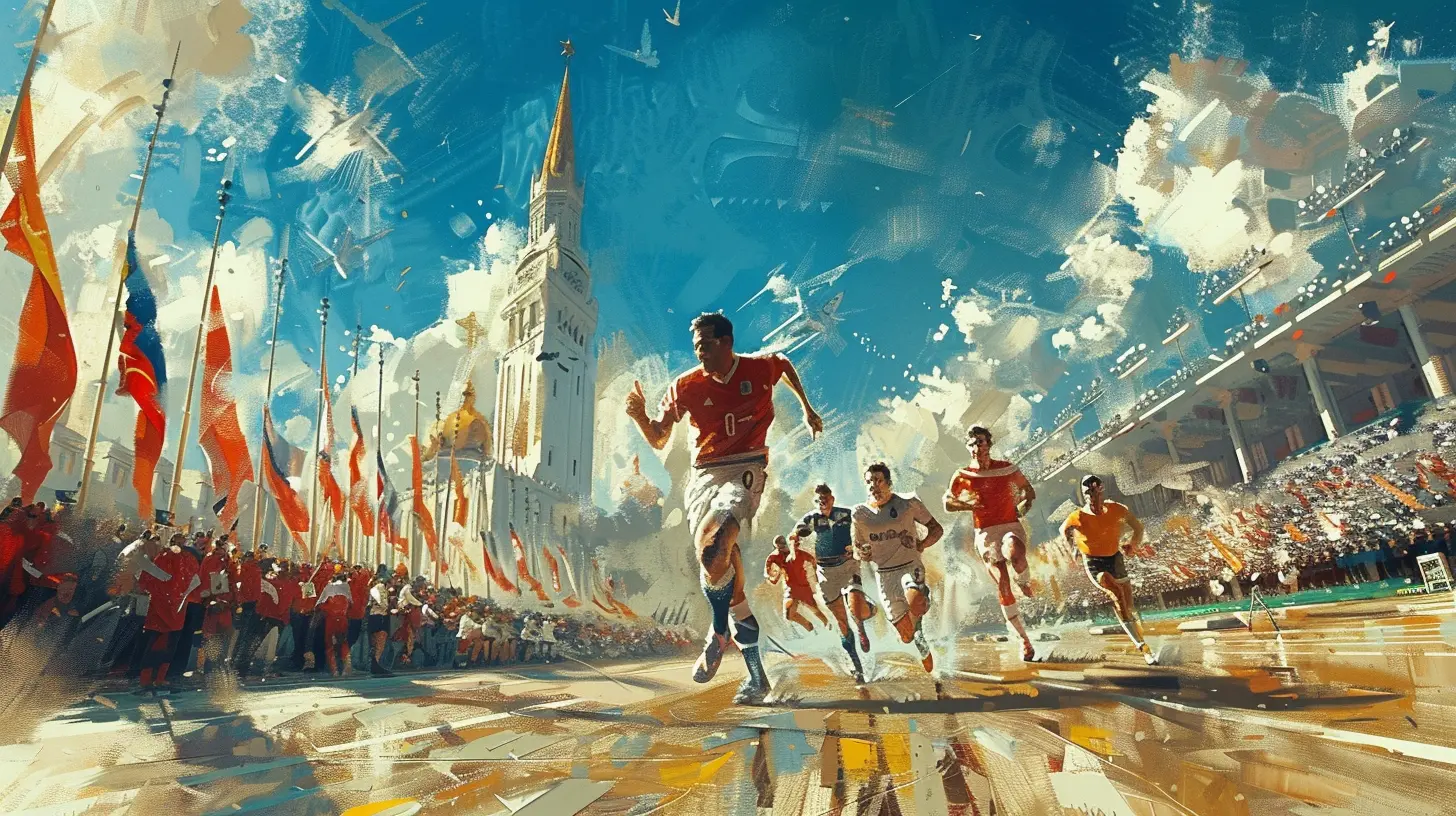
The First Recognized World Championships in Sports
Okay, so when did we actually start using “world championship” in sports? Let’s break it down.1. Chess (FIDE World Championship)
Would you guess that chess gave us one of the first recognized world championships? Crazy, right? The first official World Chess Championship was held in 1886 between Wilhelm Steinitz and Johannes Zukertort. Unlike sports that test speed or strength, chess tested the mind—and people still went wild for it.It showed that “being the best in the world” wasn’t just about brawn. It was about strategy, patience, and nerves of steel.
2. Boxing
Boxing’s world championship roots go deep too. In the late 1800s, matches were held under the Queensberry Rules, and soon after, official world titles began to form. It wasn’t mass-organized at first, but spectators loved the drama. Who wouldn’t? Two warriors, one ring, and one title to claim.Boxing was a gladiator-style sport for a modern world, and world titles gave it a sense of structure and prestige.
3. Football (FIFA World Cup)
Now we’re getting into the big leagues—literally. The first FIFA World Cup was held in 1930 in Uruguay. You can thank international football matches and the spread of the beautiful game for making this possible.FIFA (Fédération Internationale de Football Association) had already been around since 1904, but organizing a global tournament was the game-changer. And guess what? It’s now the most-watched sporting event on Earth. That’s how much people care about being “world champion” in football.
The Purpose Behind Global Competitions
So, why do we even need world championships?It’s not just about who wins the gold medal or lifts the trophy. World championships give us a global stage to celebrate our differences and our shared passion for sports. They:
- Unite different cultures under one roof.
- Create unforgettable narratives—think underdogs, comebacks, rivalries.
- Push human potential to its limits.
- Inspire generations to dream big and work hard.
At the heart of it all? A simple but powerful human desire—to belong to something greater, and to show the world what we’re capable of.
Evolution of World Championships
Let’s face it—we’ve come a long way from chariots and bare-knuckle brawls.Expansion and Inclusion
Over the decades, more and more sports have added world championships to their calendars—from swimming and gymnastics to esports and even drone racing (yep, that’s a thing!).Women’s world championships have grown explosively as well. The FIFA Women’s World Cup, for instance, has gone from humble beginnings in 1991 to record-breaking viewership in recent years.
Technology and Global Reach
With the rise of the internet and social media, these competitions are no longer exclusive to spectators in the stands. Fans from every corner of the globe can tune in, cheer, and even interact with athletes in real-time. That’s wild when you think about it.Emotional Impact of World Championships
Let’s talk feels.There’s something intoxicating about world championships. The drama. The heartbreak. The sheer joy. Remember when Usain Bolt broke the 100m record? Or when Argentina lifted the 2022 World Cup with Messi at the helm? Goosebumps, right?
These moments go beyond stats—they become a part of our collective memory. They remind us of the highs and lows of life, of the beauty of striving for greatness, and of the power of perseverance.
Especially when your favorite athlete or team is involved—it's like you’re out there, fighting for the win.
Controversies and Challenges
But hey, it's not all gold medals and confetti.World championships often come with their share of controversies—doping scandals, biased judging, political tensions, and even corruption within governing bodies.
These moments hurt the credibility and spirit of the competition. That’s why transparency, fairness, and accountability are crucial moving forward. After all, if the game isn’t fair, what’s the point, right?
The Future of World Championships
So, what’s next?We’re already seeing hybrid events like the World Games, where non-Olympic sports get their time to shine. Esports is booming, and virtual reality competitions might be just around the corner. The line between traditional and modern sports is blurring.
And sustainability is becoming a huge focus too—because what good is a gold medal if it’s earned on a dying planet?
Closing Thoughts
From ancient Greece to 21st-century megastadiums, world championship competitions have come a long way. They reflect who we are—flawed, passionate, competitive, and full of hope.At the end of the day, whether you’re shouting from the stands or watching from your couch with popcorn in hand, world championships give us something priceless: a reason to believe in the magic of sport.
So, the next time you're watching the finals of any world-level competition, remember—you’re witnessing history, legacy, and a whole lot of heart in motion.
all images in this post were generated using AI tools
Category:
World ChampionshipsAuthor:

Nelson Bryant
Discussion
rate this article
1 comments
Zylith Barrett
This article sheds light on how world championship competitions evolved, highlighting the blend of tradition and competition. It's fascinating to see how these events shape national pride and athletic excellence over time.
July 19, 2026 at 4:19 AM
Nelson Bryant
Thanks for your thoughts! It's amazing how these competitions not only reflect our traditions but also foster national pride and excellence in sports. I'm glad you found it interesting!