Power Rankings Revisited: Who Overachieved in 2027
8 October 2026
Every December, power rankings get treated like scripture. Every January, they get treated like receipts. The gap between those two moments is where reputations are made and where lazy analysis gets exposed.
The 2027 season gave us a masterclass in that gap. Teams that looked like afterthoughts in August are now the ones front offices are studying frame by frame. Teams that owned the top five spots in preseason polls spent the fall explaining themselves. And the most interesting part is not who won. It is why the teams that beat expectations actually did it, because the mechanisms behind overachievement are repeatable, while the hype that drives preseason rankings is not.
This is not a victory lap for predictive models. It is a postmortem on what the rankings got wrong, what the outliers understood that the consensus did not, and what you should take from all of it before you build your own board next season.
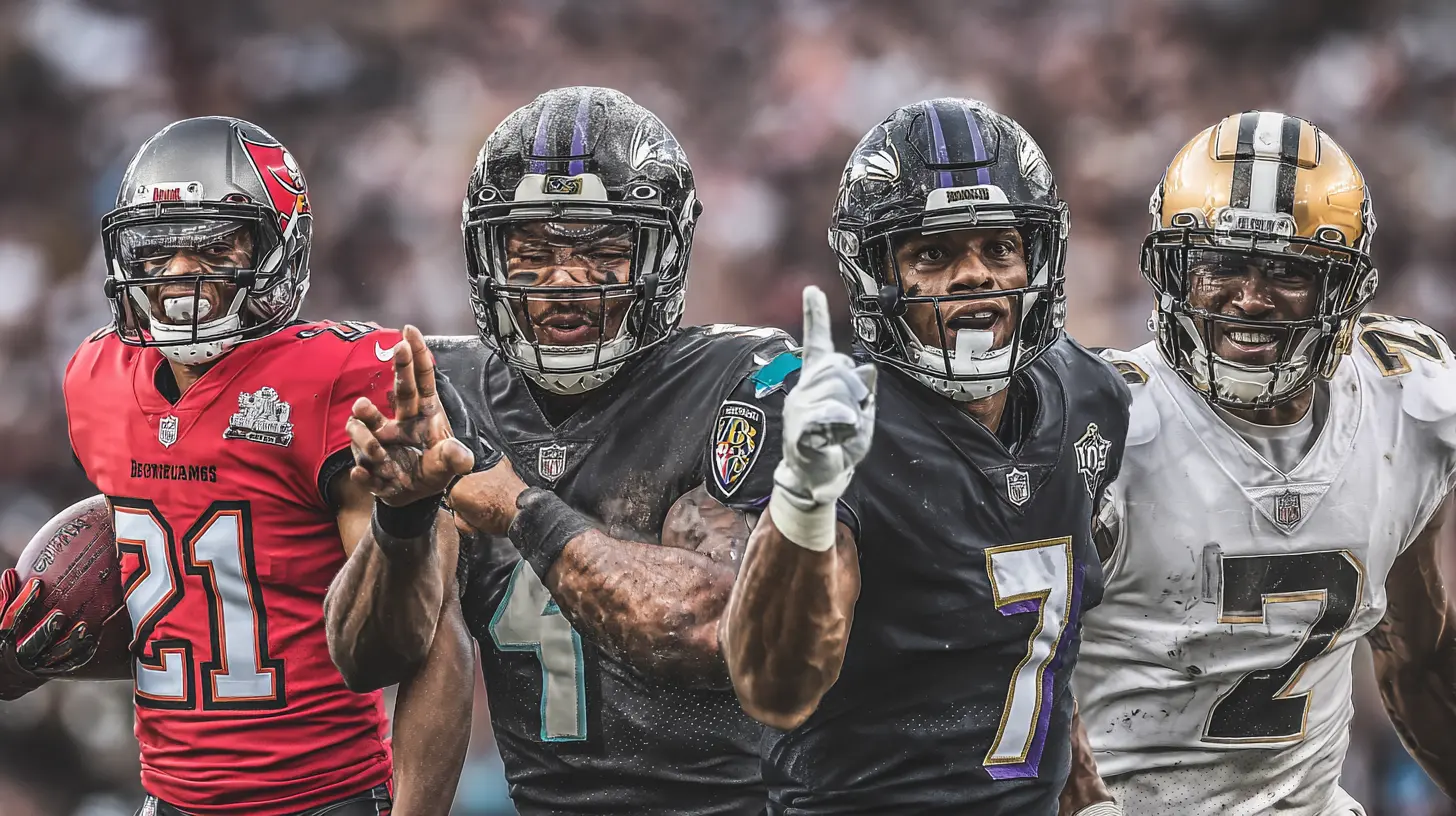
What "Overachievement" Actually Means
Before handing out credit, define the term. Overachievement is not the same as winning. A team projected to finish fourth that finishes second overachieved relative to expectations. A team projected to finish first that finishes first did its job. A team projected to finish first that finishes third underachieved, even if its final record looks respectable in isolation.That distinction matters because most fan bases confuse outcome with performance. A 12 win season feels like proof of something. But if the market, the models, and the schedule all pointed to 12 wins, the season was execution, not surprise. Real overachievement shows up in the delta between what was reasonably expected and what actually happened, adjusted for context like injuries, schedule strength, and roster turnover.
There is also a second layer. Some teams overachieve in the standings. Others overachieve in development, meaning they win fewer games than the hype but leave the season with a more valuable roster than anyone anticipated. Both are worth tracking, but they require different scorecards.

The Four Engines of Overachievement
When you strip away the noise, teams that beat their projections usually do it through one of four mechanisms. Most great outliers use two or three at once.1. Scheme ahead of talent
The most reliable overachievement engine is a coaching staff that installs a system before it has the personnel to run it at full capacity. The system creates easy answers for average players, and those easy answers compound over a season.Think about what this looks like in practice. A defensive coordinator who commits to disguising pressure packages can make a mediocre pass rush look elite for stretches, because the quarterback cannot diagnose where the fourth rusher is coming from. An offensive staff that leans into motion and misdirection can turn a receiver room without a true number one into a matchup problem every week.
The trade-off is real. Scheme heavy teams tend to have lower ceilings in the postseason, when opponents have more time to prepare and individual talent gaps get exposed. But over a 17 or 18 game season, scheme can buy you three or four wins you had no business getting.
2. Health luck that the market underpriced
Nobody wants to admit how much of professional sports is availability. Analysts talk about it in the abstract, then build rankings as if injury risk is evenly distributed. It is not.Teams that overachieve frequently benefit from two things at once: better than expected health, and a roster constructed so that one injury does not collapse an entire position group. The second part is the skill. The first part is the luck. Confusing the two is how front offices talk themselves into bad contracts.
If you are evaluating a team's overachievement, ask a simple question. Did they stay healthy, or did they build depth that made health less important? The first is not repeatable. The second is.
3. Market inefficiency in player acquisition
Every few years, a position gets undervalued league wide. A decade ago it was run stopping linebackers. More recently it has been certain flavors of slot receiver, and in some leagues, veteran backup quarterbacks who can run a system without turning the ball over.Teams that overachieve often exploit these inefficiencies before the rest of the league catches on. They sign the player everyone else calls a scheme fit and turn him into a starter. They draft the prospect with a weird athletic profile and coach him into a role.
The catch is that inefficiencies close fast. Once three teams win with the same archetype, the price goes up. Overachievement through market inefficiency is a window, not a strategy.
4. Variance that broke the right way
This is the uncomfortable one. Some overachievement is just noise. A team goes 6 and 1 in one score games. A kicker hits five attempts from beyond 50. A fumble recovery rate sits at an unsustainable level.Analysts hate admitting this because it makes for a boring story. But one score games are close to coin flips over large samples, and teams that win them at a 75 percent clip are usually not clutch. They are lucky. The following season tends to correct the record, which is why you should be suspicious of any team whose overachievement is built entirely on a gaudy record in tight games.

Case Studies From the 2027 Season
The specific teams matter less than the patterns they reveal, but the patterns need examples to stick.The team that won with a rebuilt offensive line
One of the season's biggest surprises came from a roster that entered the year with three new starters on the offensive line, two of them late round picks. Conventional wisdom said the offense would stall. Instead, the staff simplified the protection scheme, leaned on play action, and asked the quarterback to get the ball out in under two and a half seconds.The result was not a dominant offense. It was an efficient one. Fewer sacks, fewer negative plays, and a run game that stayed on schedule. That is the scheme ahead of talent engine working exactly as designed.
The lesson is not that offensive line play does not matter. It is that protection is a system, not just a collection of individuals, and systems can be built faster than talent can be acquired.
The team that won the turnover battle
Another surprise team finished the season with a turnover margin that ranked near the top of the league despite a defense that graded out as average by most underlying metrics. Strip sacks, tipped interceptions, and recovered fumbles all broke their way.This is the variance engine. Turnovers are partially skill and partially chaos. Some defenses do force more of them through pressure and ball disruption. But the year to year correlation is weak, which means a team that wins on turnover margin alone is a candidate for regression, not a model to copy.
If you are a fan of that team, enjoy the season. If you are a decision maker, do not pay for it in free agency.
The team that found a quarterback in the middle rounds
The most durable overachievement story of the year involved a quarterback taken outside the first round who started by midseason and never gave the job back. The staff built the offense around his strengths, cut the field in half, and let his legs create plays when structure broke down.This is market inefficiency meeting scheme. The league undervalued a quarterback archetype, the team drafted him later than his production warranted, and the coaching staff refused to ask him to be something he was not.
That last part is where most teams fail. They draft a player with a specific skill set, then force him into a system that ignores it. The overachievers adapt the system to the player. That sounds obvious. It is also rare.

Why Preseason Rankings Miss These Teams
Preseason power rankings are built on three inputs: last season's results, offseason acquisitions, and reputation. All three are backward looking or narrative driven.Last season's results do not account for coaching changes, scheme shifts, or development curves. Offseason acquisitions get graded on name recognition rather than fit. Reputation rewards teams that have been good for a while, even when their roster has quietly aged out of contention.
The result is a ranking that reflects consensus, not reality. And consensus is exactly what overachieving teams exploit. If everyone agrees a team is a seven win roster, the market prices that in, and the team that wins ten gets called a surprise. It was only a surprise to people who confused consensus with analysis.
There is a practical takeaway here. If you want to spot overachievers before the season, look for teams with new coordinators, young rosters on the rise, and a scheme that fits the personnel rather than the other way around. Those are the ingredients. The rankings will catch up in December.
Common Mistakes When Evaluating Overachievers
Mistaking a hot streak for a trend
A five game stretch in the middle of the season is not evidence of a new identity. Look at the full season, and look at whether the underlying numbers moved or just the win column.Ignoring strength of schedule
Beating up on a soft schedule inflates records. A team that overachieved against weak opponents may be exactly what its projection said it was once the schedule stiffens.Overvaluing one player
A single breakout player can lift a team, but sustained overachievement usually comes from systems and depth. If the entire story is one guy, the story is fragile.Assuming regression means failure
A team that overachieved on variance will likely win fewer games next season. That does not mean the team got worse. It means the coin flips evened out. Judge the process, not just the record.
How to Use This Without Getting Burned
If you are a fan, use this to calibrate expectations. If you are an analyst, use it to build better questions. If you are a decision maker, use it to separate signal from noise before you commit resources.The practical framework looks like this. First, identify the mechanism behind the overachievement. Was it scheme, health, market inefficiency, or variance? Second, ask whether that mechanism is repeatable. Scheme and market inefficiency usually are, at least for a window. Health and variance usually are not. Third, check whether the roster and coaching staff can sustain the mechanism if opponents adjust.
That third step is where most evaluations stop too early. Opponents watch film. They adjust. The team that overachieved with a gimmick will face a league that has solved the gimmick by week eight of the following season. The team that overachieved with depth and development will keep winning because those advantages do not disappear when someone game plans for them.
The Bigger Picture
Power rankings are a snapshot, not a verdict. They are useful for framing a season, and useless for predicting one. The 2027 season made that clearer than most.The teams that beat expectations did not do it by accident. They found edges, built systems around their actual players, and let the market underestimate them. Some of those edges will hold. Some will close. The ones that hold are the ones rooted in process rather than luck.
That is the real lesson. Overachievement is not magic. It is the visible result of invisible work, plus a little help from the schedule and the bounce of the ball. The teams that understand the difference are the ones that stay good. The teams that do not are the ones that show up in next year's regression articles.
So when the 2028 preseason rankings drop, do not memorize them. Interrogate them. Ask what changed, what stayed the same, and which teams are being priced on reputation instead of reality. The overachievers are already in there. You just have to know where to look.
all images in this post were generated using AI tools
Category:
Season RecapsAuthor:

Nelson Bryant