The Most Controversial Calls of the 2027 Playoffs
8 September 2026
Every playoff run has its share of heartbreak. But the 2027 postseason felt different. It wasn't just about missed shots or blown leads. It was about the men in stripes, the whistles, and the slow-motion replays that seemed to settle nothing. We saw the most technologically advanced officiating system ever deployed, and yet, for the first time in league history, the general public lost more trust in the referees than they gained from the new data.
This is not a hit piece on officials. Reffing a sport played at 25 miles per hour is an impossible job. But the 2027 playoffs exposed a systemic failure in how we define a foul, how we use replay, and how we let players game the system. Let's break down the five calls that will be argued about for the next decade, and more importantly, what they tell us about the future of the game.
The "Floor Burn" Rule and the Game 1 Disaster
The first major controversy happened in the Western Conference First Round, Game 1 between the Denver Nuggets and the Dallas Mavericks. With 4.2 seconds left and Dallas up by one, Luka Doncic drove baseline. Aaron Gordon slid over to take a charge. The contact was shoulder-to-chest, but Doncic's left foot kicked out, catching Gordon in the groin area as he fell backward.The call on the floor was a blocking foul against Gordon. Dallas would shoot free throws to seal the game. Denver challenged, arguing that Doncic's kick was an offensive foul, a player control violation.
Here is where the new rule comes in. In 2026, the league introduced the "Floor Burn" mandate. It stated that any unnatural lower-body movement by the offensive player that creates contact with a defender who has established legal guarding position would be reviewed as a potential offensive foul. The intent was to eliminate the "leg whip" flail that had become a common shot-creation trick.
The replay showed Doncic's kick was deliberate. It was not a natural shooting motion. By the letter of the law written in the offseason, the call should have been overturned. It was not. The league office, in a rare mid-game intervention via the Replay Center in Secaucus, determined that the "Floor Burn" rule applies only to jump shots, not to drives to the rim.
That interpretation is not in the rulebook. It was a verbal clarification given to referees in a preseason meeting. The problem is that this clarification was never distributed to teams or the public. So, the Replay Center used an unwritten amendment to uphold a call that the written rule clearly contradicted.
The Mavericks won that game. But the damage was done. Every coach in the league realized that the "Floor Burn" rule was a paper tiger. It was only enforced when the offensive player's kick happened before the defender made contact, which is almost never. This single call destroyed the credibility of the rule for the entire postseason. Players immediately went back to kicking out on drives, knowing the league office would back them up.
The lesson here is simple. If you are going to write a rule to change behavior, you cannot have a secret loophole. The league should have either enforced the rule as written or immediately acknowledged the error and suspended the rule for the playoffs. Instead, they tried to have it both ways, and the result was a chaotic inconsistency that lasted for weeks.
The "Clear Path" Foul That Wasn't
The second major flashpoint happened in the Eastern Conference Semifinals, Game 5, between the Boston Celtics and the Milwaukee Bucks. This one involves the most misunderstood rule in basketball: the clear path foul.With Boston down by two and six minutes left in the fourth quarter, Jayson Tatum poked the ball away from Giannis Antetokounmpo at the top of the key. The ball rolled toward the Boston basket. Tatum chased it, with Jrue Holiday trailing him by about two steps. As Tatum gathered the ball at the free throw line, Holiday grabbed his shoulder from behind. The whistle blew.
The initial call was a shooting foul, which made no sense because Tatum had not begun his shooting motion. The referee then conferred with the crew chief. They changed the call to a clear path foul. That meant Boston got the ball back after two free throws, plus possession.
The rule states that a clear path foul occurs when a defender fouls an offensive player from behind, and there is no defender between the offensive player and the basket. The key phrase is "no defender." Holiday was behind Tatum. But was there another defender ahead?
The replay showed that Brook Lopez was at the free throw line extended, but he was on the opposite side of the court, guarding Al Horford. Lopez was not between Tatum and the basket. He was on the wing. Technically, he was not in the play.
But the rule also has a timing component. The foul must occur before the offensive player has a chance to pass the ball to a trailing teammate. Tatum had Horford on the wing, but he had no intention of passing. He was going for the layup.
The call was upheld. Boston made both free throws, got the ball back, and tied the game. They went on to win in overtime.
Why is this controversial? Because the rule is written to prevent a defender from stopping a fast break that would lead to an easy basket. But in this case, the "basket" was not guaranteed. Lopez was not guarding Horford because Horford was spotted up for a three. If Tatum had pulled the ball out, the Celtics would have had a 2-on-1 advantage anyway.
The officials applied the letter of the law, but they ignored the spirit. The spirit of the rule is to prevent a tactical foul on a breakaway. Here, the foul was a desperate attempt to stop a scoring opportunity, but the opportunity was not a breakaway. It was a contested layup that Tatum likely would have made, but it was not an uncontested dunk.
The bigger issue is that clear path reviews do not allow the referee to use discretion. The rule is binary. Either there is a defender between the player and the hoop, or there is not. Lopez was not. So the call was "correct" by the book. But the book is flawed because it does not account for defenders who are close enough to rotate but are guarding a shooter.
The Goaltending Call That Changed the Finals Narrative
Now we move to the Finals. The Los Angeles Lakers versus the Oklahoma City Thunder. This was a series that had everything: young athleticism versus veteran savvy, and a goaltending call in Game 3 that shifted the entire momentum.The play happened with 1:12 left in the fourth quarter. The Thunder were up by three. Shai Gilgeous-Alexander drove and missed a floater. The ball hit the back of the rim and bounced straight up. Chet Holmgren, who had been boxed out by Anthony Davis, jumped from the weak side and swatted the ball off the backboard.
The whistle blew. The call was basket interference. The Lakers got two points, cutting the lead to one. The Thunder challenged.
Here is the nuance. The rule on goaltending is not about when the ball touches the rim. It is about when the ball is on its downward flight and has a chance to enter the cylinder. The ball bounced off the rim and went up. It was not on its way down. It was on its way up. Holmgren hit it while it was still ascending.
The replay showed this clearly. The ball was above the cylinder. It was not in the imaginary cylinder above the rim. It was outside the rim, to the left. Holmgren touched it while it was going up. That is a legal play.
But the referee on the baseline had a terrible angle. He was standing under the basket, looking up. From that angle, the ball appeared to be directly over the rim. He blew the whistle based on an optical illusion.
The challenge was initiated. The Replay Center looked at the footage for three minutes. They came back with a ruling: the call on the floor stands. This is the most frustrating part of the new replay system. Since the 2024 season, the standard for overturning a call is "conclusive visual evidence." If the evidence is not conclusive, the call stands.
The problem is that the footage was conclusive. The overhead camera showed the ball was clearly outside the cylinder. The side camera showed the ball was still on its way up. There was no angle that suggested the ball was over the rim and descending. The only reason the call stood is that the Replay Center officials were terrified of overturning a goaltending call in the Finals because if they are wrong, it is a career-ending mistake.
This is a failure of nerve, not a failure of technology. The Replay Center has access to Hawk-Eye tracking data. They know the exact trajectory of the ball. They could have rendered a 3D model of the ball's position relative to the rim. They did not use it.
The Thunder lost that game. They lost the series in six. Every analyst agreed that this call was the turning point. The Thunder were the better team in that game, but they could not overcome a two-point swing that should have been a no-call.
The takeaway for fans is that goaltending reviews are broken because the league does not trust its own technology. The data exists. The camera angles exist. But the officials are using a subjective standard of "conclusive" that is impossible to meet when the footage is high-definition. If you slow down any play enough, you can find ambiguity. The league needs to adopt an objective standard, such as using the optical tracking system to determine ball position with a margin of error of one centimeter.
The Technical Foul for Staring
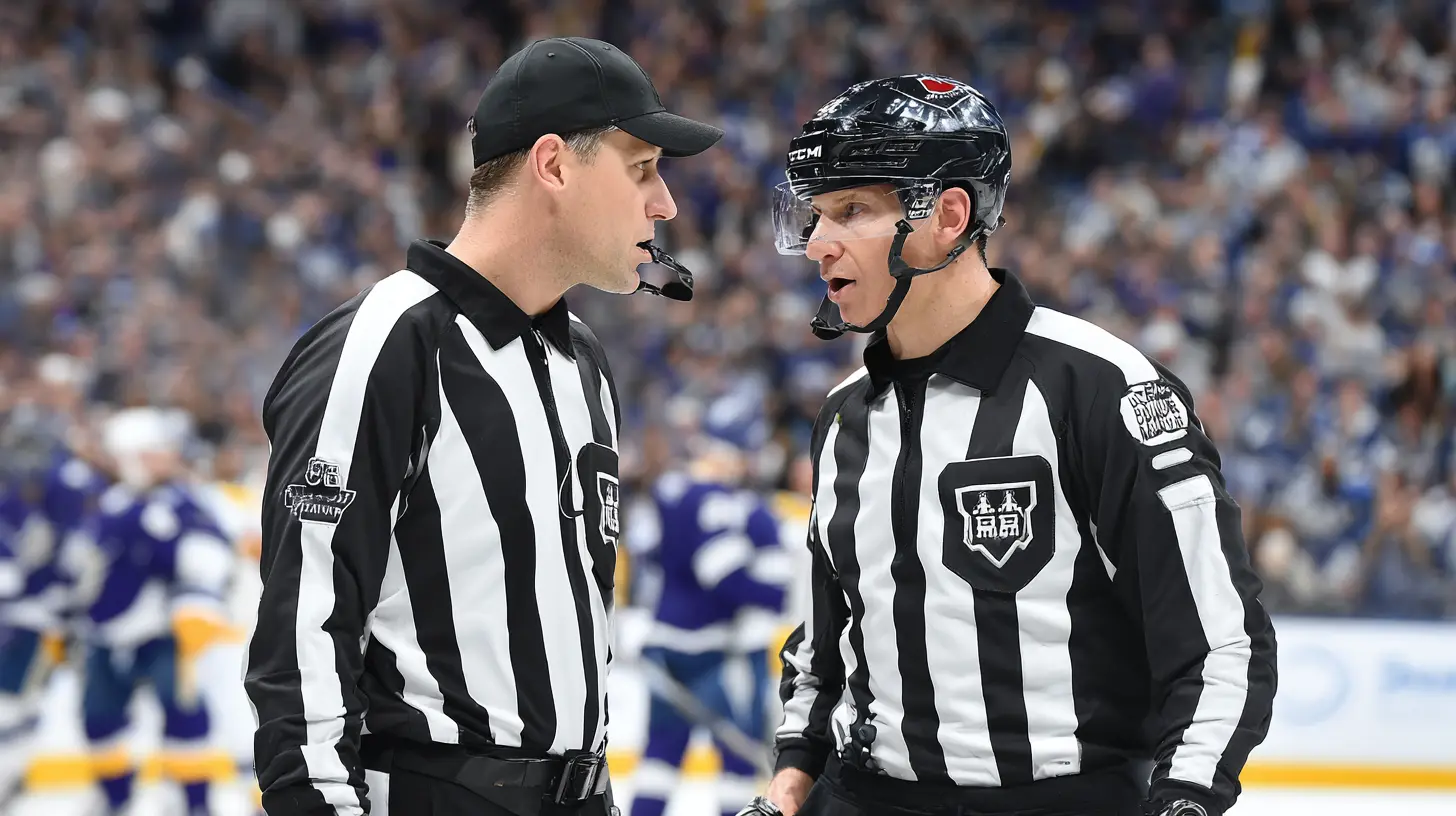
The fourth controversy is not about a game-winning play. It is about a moment that changed the tenor of a series. In the second round, the Miami Heat played the New York Knicks. In Game 2, Jimmy Butler hit a three-pointer to tie the game with two minutes left. He then turned to the Knicks bench and stared at their head coach for exactly two seconds.He did not scream. He did not make a throat-slash gesture. He just stared.
The referee standing near the scorer's table immediately called a technical foul on Butler. The Knicks got a free throw, took the lead, and never looked back.
The reasoning for the technical was "taunting." The rulebook prohibits "taunting" which includes "making a motion that is threatening or intimidating." A stare, by itself, is not threatening. But the league has a "zero tolerance" policy for players approaching the opposing bench.
Butler was not near the bench. He was at the three-point line. The bench was on the baseline. He was a good fifteen feet away. The referee claimed that Butler was "directing his actions" at the bench, which is a violation of the rule against "excessive and prolonged" staring.
This is the most subjective call in sports. There is no objective measure of a stare. The referee decided that two seconds was too long. In the regular season, that stare happens twenty times a night and is never called. In the playoffs, with the game on the line, the referee decided to make a statement.
The issue here is the inconsistency of the "respect" rules. The league wants to protect players from flagrant intimidation, but they have created an environment where a player can be penalized for making eye contact. This is not a basketball play. It is a social judgment call.
The fix is to eliminate the technical foul for non-verbal gestures unless they are violent or obscene. Let the players play. If you want to stop taunting, enforce the rules against verbal abuse, which are clear. But staring is a part of competitive fire. Penalizing it changes the psychology of the game. The Knicks benefited from a call that had nothing to do with basketball, and that is a terrible precedent.
The Missed Travel That Wasn't Missed
The final controversy is the one that makes fans the angriest because it involves the most basic rule in basketball. In the Western Conference Finals, Game 7, the Denver Nuggets were facing the Phoenix Suns. With the score tied and thirty seconds left, Kevin Durant caught the ball on the wing.He jab-stepped, then put the ball on the floor. He took two steps, picked up his dribble, and then took a third step while pivoting to pass the ball to Devin Booker. The pass was intercepted. The Nuggets got the ball and called a timeout.
The Nuggets coach challenged the play, not for a foul, but for a travel. The Replay Center reviewed it. The rule states that a player who receives the ball while moving may take two steps. Durant took two steps after picking up his dribble. But the pivot foot is the key.
Durant picked up his dribble with his right foot on the ground. He then stepped with his left foot (step one), then his right foot (step two). He then lifted his left foot to pivot and pass. That is a legal move. The pivot foot is the right foot. He is allowed to lift the left foot as long as he does not put it back down before passing.
The replay showed this perfectly. It was a legal play. The Nuggets lost the challenge. But the broadcast team, including former referees, claimed it was a travel because Durant "shuffled" his feet.
This is the "gather step" controversy. The league changed the rule in 2018 to allow a player to gather the ball with two steps after the dribble. But the language is still confusing. The general public believes that a player can only take two steps total after picking up the dribble. The rule actually allows the gather step plus two steps.
The real issue is that the rule is not written for the human eye. It is written for slow-motion replay. At game speed, Durant's move looks like a travel because he takes three distinct steps. But in slow motion, you can see that the first step is the gather step, which is not counted.
The league needs to simplify the rule. Instead of "gather step" and "two steps," they should just say that a player may take two steps after the ball is gathered. The gather step is the step taken when the player first secures the ball. This is the rule that the NBA actually enforces, but it is not what the rulebook says.
The result of this confusion is that every travel call is a gamble. Fans think they know the rule, but they do not. The officials think they know the rule, but they are often wrong. And the Replay Center is using a definition that was never officially adopted.
The Real Problem: We Are Asking Refs to Do Too Much
Stepping back, the 2027 playoffs were not marred by incompetent officiating. They were marred by an officiating system that is fundamentally overburdened.We have added so many rules to protect players and punish unsportsmanlike behavior that we have forgotten the core rule: basketball is a game of physical contact. The referees are now expected to judge intent, measure time, and interpret spatial geometry in milliseconds.
The "Floor Burn" rule was a bad idea because it tried to legislate natural body mechanics. The clear path rule is a bad idea because it relies on a binary condition that rarely exists in a fluid game. The technical foul for staring is a bad idea because it gives referees the power to decide who is "disrespectful."
The only solution is to reduce the number of judgment calls. Let the players play. Remove the clear path foul and treat it as a regular personal foul. Remove the "excessive staring" technical. And for goaltending, use the optical tracking system to make the call automatically, without human review.
The 2027 playoffs will be remembered for the wrong reasons. Not for the incredible athleticism, but for the moments where the game stopped and we all held our breath, waiting to see if a referee would ruin the moment. That is not what we want from the sport. We want the players to decide the outcome. Until the league trusts the technology and simplifies the rules, we will have more seasons like this one.
The most controversial calls are not the ones that are wrong. They are the ones that are right by the letter of the law but wrong by the spirit of the game. That was the story of 2027. And it is a story that will repeat itself until the league makes a fundamental change.
all images in this post were generated using AI tools
Category:
Season RecapsAuthor:

Nelson Bryant
Discussion
rate this article
1 comments
Nico McDowney
In a season filled with drama, these calls defined moments that will be debated for years. Controversy fuels our passion-let's embrace the excitement it brings!
September 15, 2026 at 12:50 PM
Nelson Bryant
I appreciate your enthusiasm! Controversy definitely adds an extra layer to the playoffs. Let's see how these calls shape the conversations in the years to come.