The Art of Falling: How to Take a Tumble Safely in Skateboarding
2 March 2026
Skateboarding is all about pushing boundaries, testing limits, and, let's face it—falling. Whether you're a beginner just getting comfortable on a deck or a seasoned skater attempting the next big trick, bailing is inevitable. Instead of fearing the fall, why not embrace it and do it the right way?
That’s right—there’s a safe way to fall in skateboarding. Knowing how to take a tumble without wrecking yourself is just as crucial as perfecting that kickflip. So, let’s break it down: how do you fall like a pro without breaking bones?
Why Learning to Fall Matters
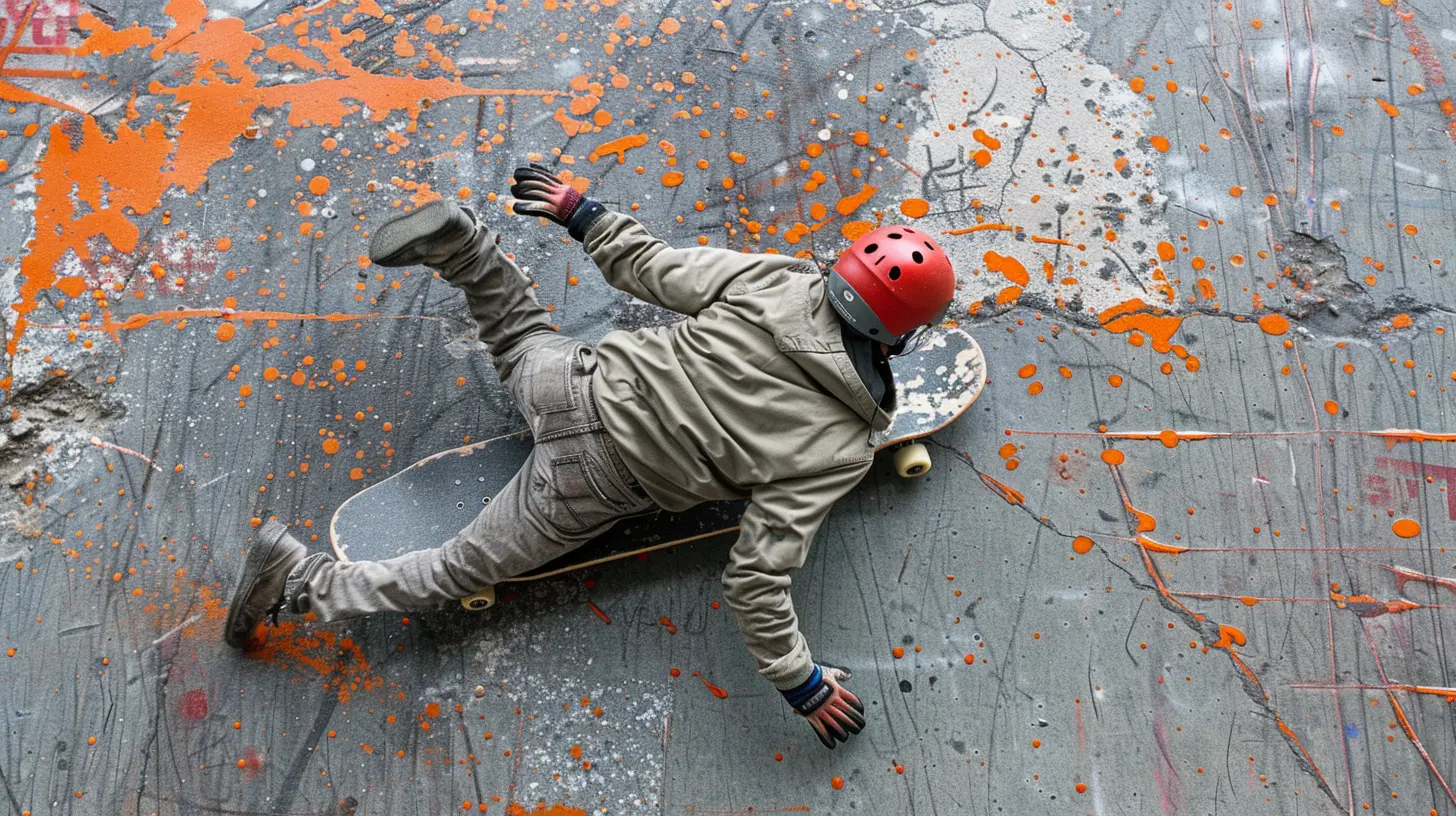
If you’ve been skating for even a few days, you already know—slams happen. But here’s the thing: falling the wrong way can turn a minor wipeout into a serious injury. A bad landing can lead to sprains, fractures, or even concussions.On the flip side, falling correctly can significantly reduce the damage. Think of it like martial arts—fighters learn how to hit the ground properly to avoid injury. The same principle applies to skateboarding. Mastering the art of falling will allow you to get back up, shake it off, and keep shredding.
The Golden Rules of Falling
Before we dive into specific techniques, let’s lay down some essential rules for safe falling:- Stay loose – Tensing up increases the impact on your body.
- Avoid using your hands to catch yourself – This is a fast track to wrist injuries.
- Roll with the fall – Distribute impact across a larger surface area.
- Protect your head – Even if you’re wearing a helmet, avoid hitting your head at all costs.
Got it? Cool. Now, let’s go over falling techniques that’ll keep you in one piece.
How to Fall Safely in Skateboarding
1. The Tuck and Roll Technique
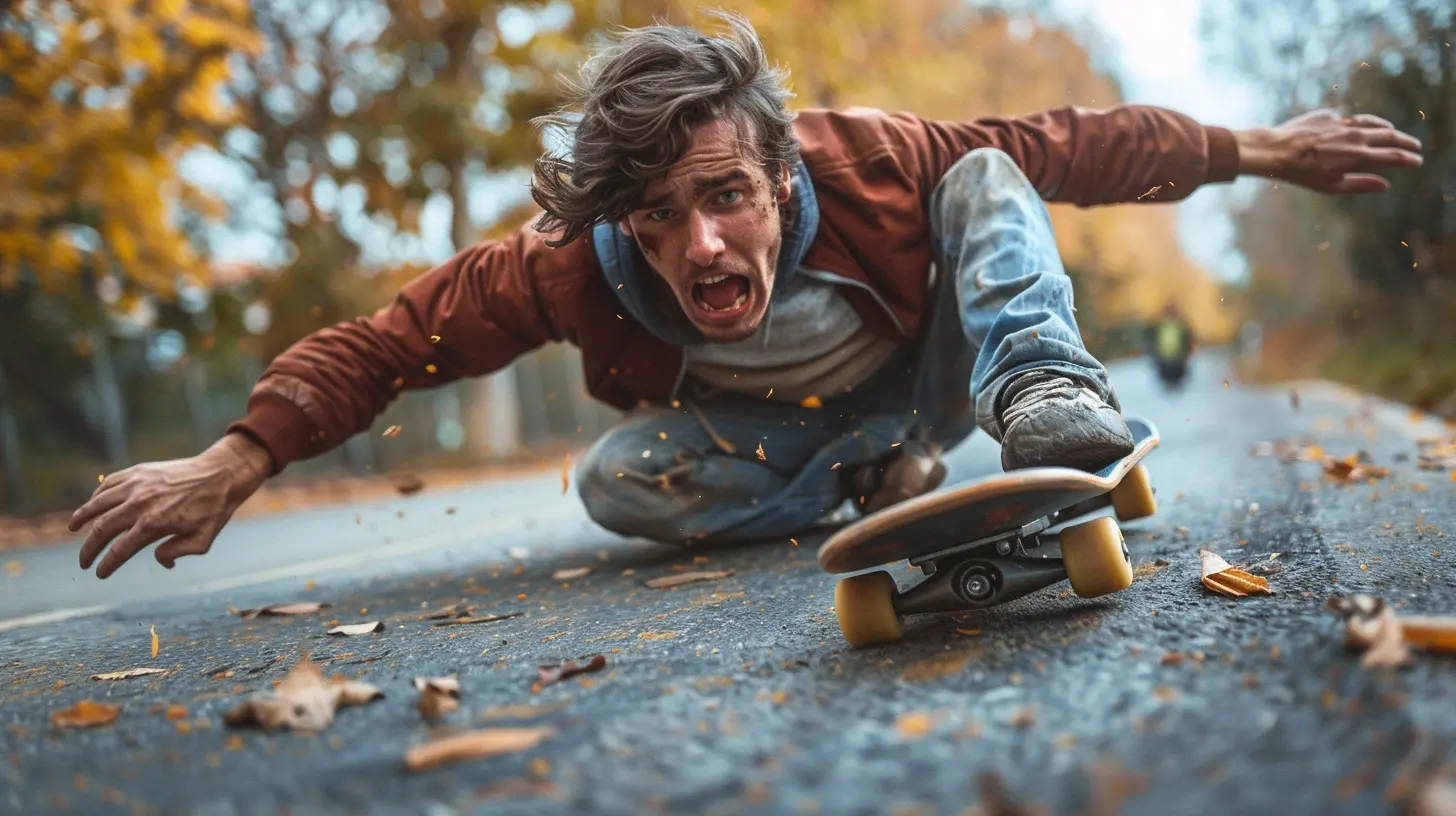
When falling, your instinct might be to stiffen up and break the fall with your hands. Resist that urge. Instead, channel your inner ninja and use the tuck and roll technique.How to do it:
- As you begin falling, tuck your arms close to your body.- Try to direct your fall sideways or backward, rather than forward.
- As you hit the ground, roll onto your shoulder and across your back to disperse impact.
- Let the momentum of the tumble carry you, rather than stopping abruptly.
This technique is especially useful for high-speed falls or when bailing mid-trick.
2. The Slide Out (For Street and Park Skating)
Ever seen skateboarders fall on smooth surfaces and slide it out like a pro? That’s intentional. Sliding reduces impact and spreads it over a longer duration instead of a sudden, jarring stop.How to do it:
- If you're wearing pads (knee pads help a lot), use your knees and forearms to guide your slide.- Lean into the fall and let your momentum carry you forward.
- Try to angle your body so that you slide rather than land flat.
This works great on smooth concrete and ramps, letting you slide out safely instead of slamming hard.
3. The Running Bail (When You Have Forward Momentum)
Sometimes, rather than hitting the ground, the best move is to run it out. If you feel yourself losing balance but still have forward momentum, try turning your fall into a sprint.How to do it:
- The moment you realize you’re going down, kick the board away and start running.- Let your feet take over and absorb the speed gradually.
- Keep your knees bent to control the transition from skating to running.
This technique works best for low-speed bails or when you're rolling off a platform or a ledge.
4. The Controlled Back Fall (For Unexpected Slams)
Sometimes, you won’t have much control over how you fall—especially when you get caught off guard. In those cases, knowing how to fall backwards safely can save your spine.How to do it:
- As you fall backward, resist the urge to throw your arms behind you to break the fall.- Instead, cross your arms over your chest and tuck your chin to prevent your head from slamming.
- Try to land on your upper back and let your body roll with the motion rather than splatting flat.
This technique can save you from nasty tailbone and wrist injuries.
Essential Gear That Can Help Reduce Injury
Mastering how to fall is important, but let’s be real—protection gear is a game-changer.1. Helmet
Your brain is irreplaceable. A good quality skateboard helmet can prevent serious head injuries, and trust me, cracking your skull is way worse than helmet hair.2. Knee and Elbow Pads
For park skaters, knee and elbow pads are a must. They not only protect your joints but also allow you to slide out safely.3. Wrist Guards
If you struggle with using your hands to catch yourself (which you should avoid), wrist guards can help prevent fractures from bad bails.4. Proper Skate Shoes
Believe it or not, the right shoes make a difference. Skate shoes provide grip and impact absorption, keeping your feet stable when you need to run out of a fall.Mentality: Don’t Fear the Fall
Here’s the deal—falling isn’t something to dread. It’s part of the learning process. If you hesitate or panic every time you feel yourself losing balance, you’re more likely to hurt yourself.Instead, accept that bailing is part of the sport and treat it as something to improve, not avoid. The more you practice safe falling techniques, the less daunting they become.
Pro Tips from Seasoned Skaters
- “Commit or quit” – Half-hearted attempts often lead to awkward falls. If you’re going for a trick, commit fully or bail smartly.- “Skate within your ability” – Pushing progression is great, but don’t attempt tricks far beyond your current skill level without proper prep.
- “Watch and learn” – Observe how experienced skaters fall. You’ll notice they rarely panic, and they know how to go with the motion rather than fight it.
Conclusion
Skateboarding is an adrenaline rush, but it comes with its fair share of slams. Instead of fearing the inevitable, learn how to fall correctly—keeping yourself safe while still having a blast.By mastering techniques like the tuck and roll, sliding out, running bails, and controlled back falls, you can reduce injuries and boost your confidence.
So, next time you take a tumble, do it like a pro—fall smart, get up, and keep shredding!
all images in this post were generated using AI tools
Category:
SkateboardingAuthor:

Nelson Bryant
Discussion
rate this article
2 comments
Izaak Pacheco
Great tips for safe falls—essential for every skateboarder!
April 3, 2026 at 3:52 AM
Nelson Bryant
Thank you! Safety is key for all skateboarders. Happy skating!
Owyn Collins
Falling is just gravity giving you a hug—embrace the tumble and roll with style!
March 4, 2026 at 4:26 AM
Nelson Bryant
Great perspective! Embracing falls can definitely make skateboarding more fun and helps us learn to roll with the challenges.