Meet the Multi-Sport Prodigies Changing the Game
7 August 2026
There is a special kind of athlete who refuses to be boxed into one discipline. They show up to football practice on Tuesday, dominate a tennis match on Thursday, and drop forty points on the basketball court by Saturday. These are the multi-sport prodigies, and they are reshaping how we think about athletic development, career longevity, and what it means to be truly elite.
For years, the loudest voices in youth sports screamed one thing: specialize early or fall behind. Parents pulled kids out of soccer to focus on baseball by age nine. Coaches demanded year-round commitment to a single sport, convinced that extra reps were the only path to a scholarship or a professional contract. That model has produced some stars, sure. But it has also produced burnout, overuse injuries, and a generation of athletes who peaked at fifteen.
Now, a countermovement is gaining serious momentum. The most exciting young athletes in the world are not specializing. They are weaving multiple sports into their training calendars, and they are winning at the highest levels. This is not a nostalgia trip to the 1970s when everyone played everything. This is a data-informed, psychologically sound, and physically smarter approach to becoming a complete competitor. Let's break down exactly why these prodigies are changing the game, how they do it, and what the rest of us can take from their playbook.

The Fallacy of the Ten-Thousand-Hour Rule in Sports
You have heard the number before: ten thousand hours. The idea, popularized by Malcolm Gladwell in his book Outliers, suggests that mastery in any field requires roughly ten thousand hours of deliberate practice. Coaches latched onto this like a lifeline. They told parents that if their child wanted to go pro, they needed to start those hours early and log them exclusively in one sport.Here is the problem: the ten-thousand-hour rule was based on research about violinists, not quarterbacks or point guards. And even for musicians, the research was more nuanced than the pop-culture version. For athletes, the rule collapses under its own weight. A twelve-year-old who plays baseball year-round might rack up more baseball hours than a peer who splits time between baseball, basketball, and swimming. But those extra hours come at a cost. The repetitive stress on a young throwing arm, the mental monotony of the same drills, and the social isolation from a single-sport life can all chip away at long-term potential.
The multi-sport prodigy does not care about hitting ten thousand hours by age eighteen. Instead, they are building a broader foundation. They are developing movement patterns that transfer across sports. A basketball player learns to pivot and protect the ball, which helps in football as a running back. A soccer player develops spatial awareness and footwork that translates to tennis court coverage. A swimmer builds cardiovascular capacity that makes them unstoppable in the fourth quarter of a lacrosse game.
The research backs this up. Studies on youth athletic development consistently show that early diversification leads to better long-term outcomes, fewer injuries, and higher levels of eventual sport-specific performance. The prodigies are not ignoring the ten-thousand-hour rule because they are lazy. They are ignoring it because it was never truly meant for them.
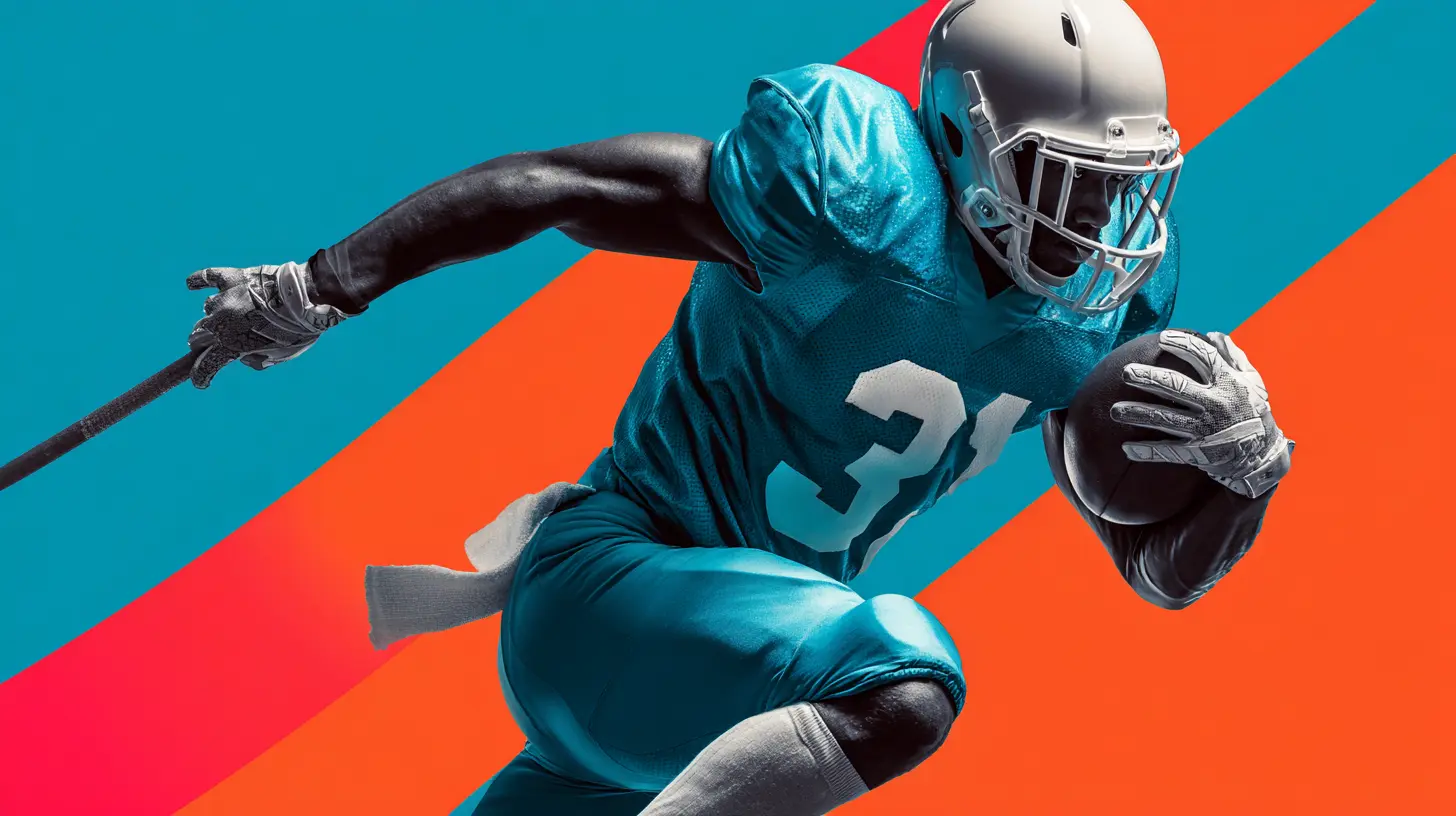
Why Multi-Sport Athletes Build Better Brains and Bodies
Let's talk about the brain first, because that is where the real magic happens. When you play only one sport, your brain becomes incredibly efficient at a narrow set of tasks. You see a pitch, you swing. You see a screen, you shoot. That efficiency is good in the short term, but it creates a kind of cognitive rigidity. Multi-sport athletes, on the other hand, constantly force their brains to adapt to new rules, new timing, and new spatial problems.This is called cognitive flexibility, and it is a superpower in competition. A multi-sport athlete learns to read patterns faster because they have seen more patterns. A hockey player understands angles on the ice that help them read a soccer field. A volleyball player develops explosive vertical timing that makes them a better basketball rebounder. The brain builds neural pathways that cross-pollinate, and that makes decision-making faster and more creative under pressure.
On the physical side, the benefits are even more obvious. Playing multiple sports means using different muscle groups in different ways. A swimmer builds broad shoulders and a strong core. A runner builds lean legs and efficient stride mechanics. A wrestler builds grip strength and body awareness. When you combine these, you get an athlete who is not just strong or fast, but functionally complete. They have fewer muscular imbalances, which means fewer overuse injuries. They have better proprioception, which is the sense of where your body is in space. That translates to better agility, balance, and the ability to avoid awkward landings that cause sprains and tears.
Compare that to the single-sport specialist who spends twelve months a year doing the same throwing motion or the same cutting movement. Their body adapts to that movement, yes, but it also overdevelops certain muscles and neglects others. The result is a fragile athlete who looks great in practice but breaks down in the playoffs. The multi-sport prodigy is built to last because they are built to move in every direction.

The Hidden Skill: Managing Load Without Burning Out
Here is the part that most people get wrong about multi-sport athletes. They assume that playing three sports means three times the workload. That is not how it works. In fact, the best multi-sport prodigies are masters of load management precisely because they are forced to think about it. You cannot play a football game on Friday, a basketball tournament on Saturday, and a track meet on Sunday without being intentional about recovery, sleep, and nutrition.The prodigy learns early that their body is a resource, not a machine. They learn to listen to the signals of fatigue. They learn that a light practice in one sport can actually serve as active recovery from a heavy practice in another. A swimmer who does a low-intensity basketball shootaround is not adding stress; they are promoting blood flow and maintaining motor skills without pounding their joints.
This is a skill that most professional athletes struggle with well into their careers. The multi-sport kid develops it by necessity. They also develop a healthier psychological relationship with sport. Because they have multiple outlets, they are less likely to define their entire identity by one game. Losses in one sport sting, but they do not destroy the athlete's sense of self. There is always another practice, another match, another chance to succeed in a different arena. This psychological resilience is invaluable, especially in the pressure-cooker environment of elite youth sports.

Real-World Examples of Prodigies Who Did It Right
Let's look at some concrete cases. You do not need to imagine hypothetical athletes when the proof is all around us.Take Deion Sanders. He played Major League Baseball and the NFL at the same time. He was a two-time Super Bowl champion and the only person to play in both a Super Bowl and a World Series. Sanders did not specialize until he was well into his professional career, and even then, he kept switching. His athleticism was undeniable, but his baseball experience made him a better cornerback. He understood how to track a ball in flight, how to change direction without losing speed, and how to stay calm in high-leverage moments.
Or look at Bo Jackson. He was an All-Star in both baseball and football, winning the Heisman Trophy in college. Jackson's career was cut short by a hip injury, but the lesson remains. His ability to excel in two sports was not a fluke. It was the result of a childhood spent playing everything, which gave him a rare combination of power, speed, and coordination.
More recently, consider Kyler Murray. He won the Heisman Trophy as a quarterback at Oklahoma and was also a first-round pick in Major League Baseball's draft. He chose football, but his baseball background contributed to his quick feet, his arm strength, and his ability to throw accurately while moving. Murray is smaller than the typical NFL quarterback, but his multi-sport foundation gave him an edge that pure football training could not replicate.
And it is not just men. Women like Abby Wambach played basketball and soccer growing up. Wambach credits her basketball background with her incredible heading ability, because she learned to time her jumps and use her body position in traffic. Serena Williams played basketball and other sports as a kid, and her court awareness and explosive movement are legendary. The pattern is consistent across genders and sports.
These are not outliers who succeeded despite playing multiple sports. They succeeded because of it.
The Competitive Advantage: Delayed Specialization in the Modern Era
The conversation around specialization has shifted dramatically in the last decade. Major sports organizations, including the American Academy of Pediatrics and the International Olympic Committee, now advise against early specialization. They recommend that young athletes sample multiple sports until at least puberty, and many suggest waiting until age fifteen or sixteen to focus on a single sport.The multi-sport prodigy is the living embodiment of this advice. They are not just surviving; they are thriving. And here is the competitive edge that most parents overlook: college recruiters love multi-sport athletes. Coaches at the Division I level know that a recruit who played three sports has a higher football IQ, a stronger work ethic, and a lower injury risk than a recruit who only played football since age ten. They also know that multi-sport athletes tend to have better leadership skills because they have interacted with a wider range of teammates and coaches.
In the modern recruiting landscape, this matters more than ever. With the transfer portal and NIL deals, college programs are looking for athletes who can adapt quickly to new systems and new environments. A kid who has only ever known one sport and one coach can struggle with that transition. A multi-sport kid has already learned how to adjust to different coaching styles, different practice rhythms, and different team cultures. They are the safer bet.
Common Mistakes Parents and Coaches Make With Multi-Sport Kids
For all the benefits, multi-sport participation is not automatically good. There are ways to do it wrong, and many parents and coaches make these mistakes every year.The first mistake is treating multi-sport participation as a grind. Some parents sign their kid up for three travel teams, hire private coaches for each sport, and schedule back-to-back tournaments every weekend. That is not multi-sport development; that is a recipe for burnout. The prodigies we admire are not over-scheduled. They are intentionally scheduled. There is a difference between playing three sports because you love them and playing three sports because your parents want a highlight reel.
The second mistake is forcing a sport that the child does not enjoy. Just because a kid is good at soccer does not mean they should play soccer. Forced participation breeds resentment. The whole point of multi-sport play is to develop a love for movement and competition. If one sport feels like a chore, drop it. The benefits of diversification come from genuine engagement, not from ticking boxes.
The third mistake is ignoring the off-season. A true multi-sport athlete does not play all three sports in the same season. They play them sequentially. Football in the fall, basketball in the winter, baseball in the spring. This natural periodization gives the body time to recover from the specific stresses of each sport. When you try to play all sports year-round, you lose that benefit and you increase injury risk.
The fourth mistake is neglecting strength training and recovery. Young athletes often think that playing more sports is enough. It is not. They still need dedicated time for sleep, nutrition, and basic strength work. The multi-sport prodigy is not just a multi-sport participant; they are a well-rounded athlete who treats their body like a professional would.
How to Build a Multi-Sport Development Plan That Works
If you are a parent, coach, or young athlete reading this, you need a plan. Here is a practical framework that aligns with how the best prodigies actually operate.First, choose sports that complement each other. Avoid stacking two sports that use the same movement patterns and the same muscle groups in the same season. For example, baseball and softball require similar overhead throwing motions. Playing both in the same spring season is a recipe for elbow problems. Instead, pair a throwing sport with a non-throwing sport, like baseball with soccer, or basketball with swimming.
Second, prioritize the sport that the athlete loves most, but do not let it dominate the calendar. A good rule of thumb is that the primary sport should occupy no more than sixty percent of the training time. The other forty percent should be split among one or two secondary sports. This ensures that the primary sport still gets attention, but the athlete remains diversified.
Third, schedule a true off-season of at least four to six weeks per year. This is non-negotiable. During this time, the athlete should do unstructured play, lift weights, or just rest. The off-season is not laziness; it is the period when the body repairs micro-damage and the brain consolidates motor learning.
Fourth, communicate with all coaches. A common problem is that coaches get territorial. The football coach wants the kid at every summer workout, and the basketball coach wants the same. The athlete and the parents need to set boundaries early and explain that multi-sport participation is a deliberate strategy, not a lack of commitment. Most good coaches will respect this, especially when they see the results on the field.
The Trade-Offs Nobody Talks About
Let's be honest. There are trade-offs to being a multi-sport athlete, especially at the elite level. The most obvious one is that you will not be the absolute best at any single sport during your teenage years. A kid who only plays basketball will have more refined dribbling moves and a deeper understanding of specific offensive sets. The multi-sport kid might be slightly behind in sport-specific tactics.This is a short-term sacrifice for a long-term gain. But it can be painful, especially for a competitive kid who wants to win state championships. There will be moments when the multi-sport athlete gets beaten by a specialist who has spent more hours on the craft. That is okay. The goal is not to win every game at age fourteen. The goal is to be a dominant, healthy, and happy athlete at age twenty-five.
Another trade-off is social. Multi-sport athletes often have a wider circle of friends, but they have less time for deep friendships within each team. They miss the inside jokes, the bus ride traditions, and the late-night bonding that comes with being fully immersed in one team. This can be a real emotional cost. The best way to handle it is to make sure the athlete has at least one team where they are fully present, not just physically but emotionally. That usually means prioritizing the primary sport for team bonding.
Finally, there is the issue of identity. A multi-sport athlete is harder to define. When someone asks, "What do you play?" they have to explain the whole schedule. Some kids love this; it makes them feel versatile and interesting. Others find it exhausting. If your child prefers to say, "I am a soccer player," then let them lead with that, even if they also play tennis and run track. The label is less important than the behavior.
Misconceptions That Still Persist
Despite the growing evidence, some misconceptions remain stubbornly alive.One misconception is that multi-sport athletes are not serious about their primary sport. This is completely backwards. The multi-sport athlete is often more serious because they have chosen their primary sport after sampling others. Their commitment is informed, not inherited. They are not playing basketball because they are running away from football. They are playing basketball because it makes them a better football player.
Another misconception is that multi-sport participation is only for kids who are not good enough to specialize. This is elitist nonsense. The best athletes in the world have almost all played multiple sports in their youth. The myth of the pure specialist is largely a creation of modern youth sports marketing, which benefits from parents paying for year-round private coaching in a single sport.
A third misconception is that you have to quit other sports once you reach high school. This is not true. Many high school athletes successfully play two sports, and some play three. The key is managing the seasons so they do not overlap. With careful planning, it is possible to play varsity football, varsity basketball, and varsity baseball without missing a single practice. It requires discipline, but it is absolutely doable.
What the Future of Sports Looks Like
The multi-sport movement is not a fad. It is a correction. For two decades, youth sports went down a path of hyper-specialization, and we saw the results: record numbers of Tommy John surgeries in teenagers, skyrocketing rates of youth anxiety and depression, and a generation of athletes who quit sports entirely by age thirteen because they were burned out.The prodigies we are seeing now are the pioneers of a healthier model. They are proving that you can be elite without being narrow. They are showing that athletic greatness is not about doing one thing a million times, but about becoming a complete human being who happens to be incredible at moving their body.
As more data comes in, and as more professional athletes speak openly about their multi-sport backgrounds, the pressure to specialize early will continue to fade. Parents will realize that the best gift they can give their child is not a private coach, but a backyard, a bike, a ball, and the freedom to play whatever they want, whenever they want.
The multi-sport prodigy is not a rare genetic freak. It is a mindset. It is a willingness to be a beginner again, to learn new rules, to fail in new ways, and to fall in love with sport all over again. That is a skill that transfers far beyond the playing field. It builds resilience, curiosity, and confidence. And those are the qualities that change the game, not just for the athlete, but for everyone watching.
So the next time you see a kid juggling a soccer ball, shooting a basketball, and swinging a tennis racket all in the same week, do not tell them to pick one. Tell them to keep going. They are not confused. They are building the future of sport, one game at a time.
all images in this post were generated using AI tools
Category:
Next Generation AthletesAuthor:

Nelson Bryant
Discussion
rate this article
1 comments
Damian Warner
These kids are so talented, I'm considering a career change to professional spectator.
August 13, 2026 at 4:06 AM
Nelson Bryant
Thanks for the support! Their talent is truly inspiring.