How the 2027 Season Will Redefine These Sports
18 September 2026
The 2027 season is not just another lap around the calendar. It is the year several sports finally stop pretending they can keep doing business the way they always have. Rule changes that were tested in minor leagues and exhibition games will arrive at full volume. Media rights deals signed years ago will hit their first real stress test. A generation of athletes who grew up with analytics, social media, and player empowerment will be in their prime, and they will not accept the old script.
This is not a prediction piece built on vibes. It is a breakdown of the forces already in motion, the decisions that will determine who wins and who gets left behind, and what fans, coaches, and executives should actually watch for. Some of these shifts will be thrilling. Some will be messy. A few will make you wonder why anyone resisted them for so long.
Let us go sport by sport, because the story is different in each one, and the stakes are not equal.
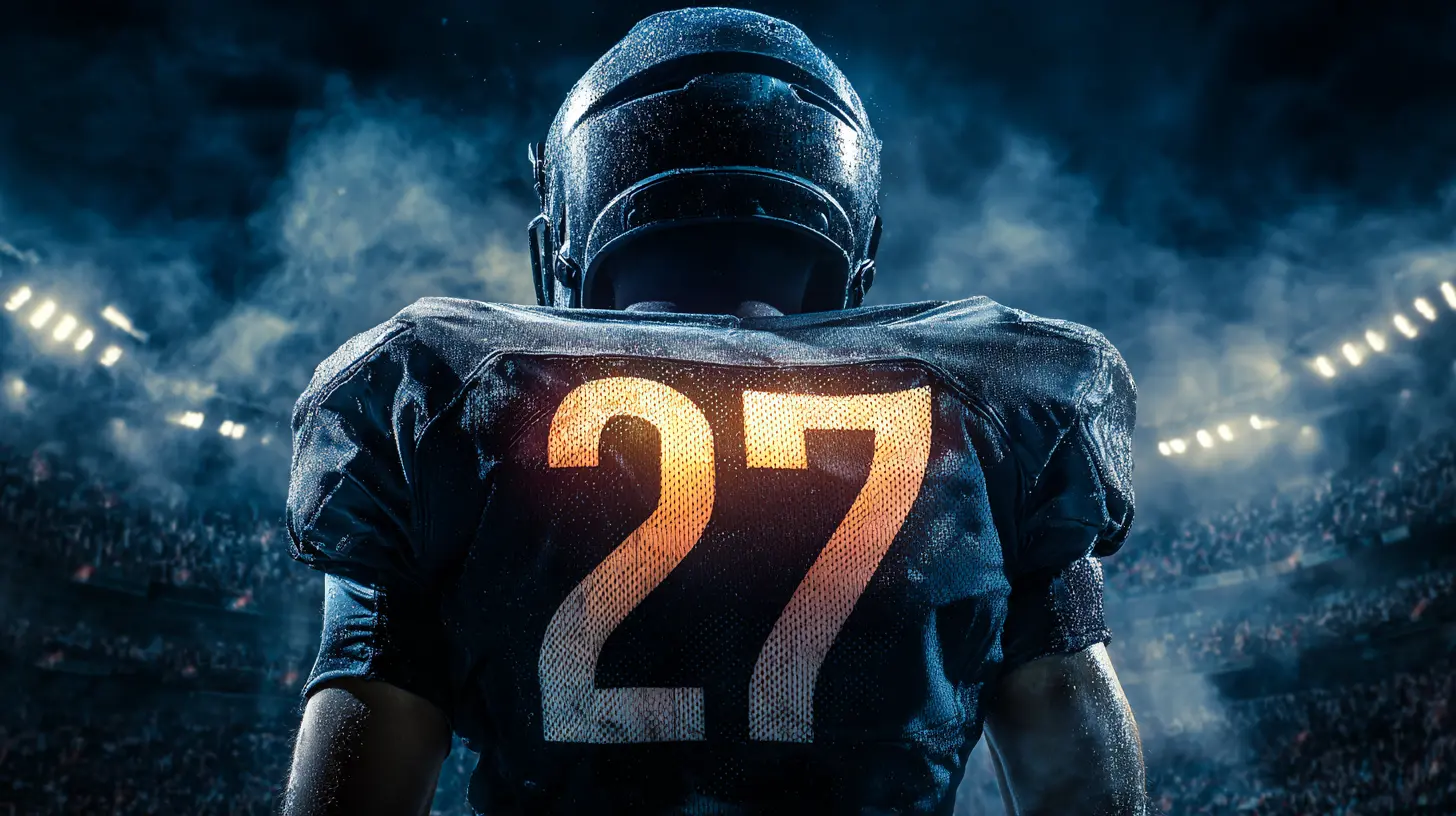
Why 2027 Is a Tipping Point, Not a Random Year
Three things converge in 2027.First, the broadcast and streaming contracts that shaped the last decade mostly expire or hit renegotiation windows. That matters because money follows attention, and attention has fragmented. Leagues that banked on cable bundles are now staring at a generation that watches clips, not games.
Second, the rule experiments that started in 2023 and 2024 will have enough data to either stick or get scrapped. Baseball's pitch clock, basketball's load management rules, soccer's expanded stoppage time, and cricket's impact player experiments all reach a maturity point where the results are undeniable.
Third, the athlete pipeline has changed. College athletes can now earn money on their name, image, and likeness. International academies are producing teenagers who are technically ready for professional minutes earlier than ever. The old development ladder is gone, and the sports that adapt their roster rules will benefit most.
Put those together and you get a season that forces choices. Standing still is a decision, and usually a bad one.

Baseball: The Speed Game Becomes the Whole Game
Baseball spent a century selling itself as a slow, conversational sport. The pitch clock killed that identity in about eighteen months, and 2027 is when the consequences fully land.The Stolen Base Economy
When the pitch clock arrived, pitchers had less time to hold runners. Bases got bigger. Stolen base attempts jumped, and teams that had ignored the running game suddenly had to invest in catchers who could throw and pitchers who could hold. By 2027, the running game will not be a bonus. It will be a core roster construction principle.Here is the practical implication. A team that cannot control the running game will bleed runs in the late innings, and no amount of home run power will fully compensate. Watch for front offices to prioritize catcher pop time and pitcher delivery speed the way they once prioritized on-base percentage. The trade-off is real: pitchers who are quick to the plate often sacrifice a tick of velocity or command. Coaches will have to decide whether that trade is worth it, and the answer will vary by ballpark.
Starting Pitchers as Relievers
The opener strategy is old news. What is new is the full-scale abandonment of the traditional starter in favor of three-inning bursts from pitchers who would have been starters a decade ago. In 2027, expect more teams to carry eight or nine pitchers who can each give you two to four innings, and fewer who can give you six.Why does this work? Because hitters see a pitcher's arsenal less often in a single game, and familiarity favors the hitter. The cost is that fans lose the narrative of a duel. The benefit is fewer blowouts and more competitive games. Whether you love it or hate it depends on whether you watch baseball for the pitching or for the pacing.
What Could Go Wrong
The biggest risk is injury. Short bursts at maximum effort are not automatically safer than long outings. Teams that push this model without a deep understanding of their pitchers' recovery patterns will lose arms. The smart organizations will use workload monitoring that goes beyond pitch counts, tracking intensity and recovery, not just volume.
Basketball: Load Management Meets Its Reckoning
The NBA has a problem it created. Teams rested healthy stars for regular season games, fans paid premium prices, and the product suffered. The league responded with rules that penalize sitting healthy players in nationally televised games. By 2027, those rules will have teeth, and the results will reshape how teams build rosters.The 65-Game Threshold and Its Side Effects
Award eligibility tied to games played changed behavior fast. Stars who want All-NBA honors now have to suit up. But there is a catch. Players who are banged up will push through minor injuries to hit the threshold, which can turn a two-week absence into a season-ending problem.My advice to teams is blunt: do not let award incentives dictate medical decisions. Build a roster deep enough that you can survive a star missing fifteen games without falling out of the playoff race. That means paying for quality bench players instead of chasing a third star who will never be healthy in May.
The International Wave
By 2027, the best player in the league might be a twenty-year-old from France or Serbia who never played college basketball. The international pipeline is producing players who are more skilled at a younger age, and the one-and-done college model looks increasingly obsolete as a development path.What does this mean for fans? More passing, more shooting, fewer isolation plays. European development emphasizes decision-making and off-ball movement. When those players become the norm, the style of play shifts. Coaches who cannot teach a motion offense will be exposed.
The Trade-Off Nobody Wants to Discuss
More skill means less physicality, and less physicality means fewer free throws and fewer fouls. That is good for pace. It is bad for players who built their careers on drawing contact. The league will have to decide whether it wants a finesse product or a physical one. It cannot have both at the same time, and pretending otherwise will produce inconsistent officiating that frustrates everyone.
Soccer: The Calendar Finally Breaks
Soccer's fixture congestion has been a complaint for decades. In 2027, it becomes a crisis.Expanded Tournaments, Exhausted Players
The Club World Cup expanded. The Champions League format changed. Domestic leagues added playoff games. Every competition wants more dates, and the players are the ones paying the price with hamstring injuries and shortened careers.Something has to give. My prediction is that by 2027, we see the first serious player-led push to cap appearances, similar to what happened in tennis with tournament scheduling. Unions will demand mandatory rest periods. Clubs will resist because they need the revenue. The compromise will probably be a hard cap on consecutive starts, enforced by the league rather than the club.
The Rise of the Specialist
As the calendar tightens, teams will stop asking players to be good at everything. Expect more specialists: the set-piece taker who plays thirty minutes, the defensive midfielder who only closes out games, the winger who only runs at tired legs. This is already happening at the top clubs, and it will trickle down.The downside is that specialist roles can stall a young player's development. If you only ever practice one job, you never learn the others. Academies will have to fight this trend, and the clubs that develop complete players will have a long-term advantage.
VAR and the Patience Problem
Video review is not going away, but its current form is unsustainable. Stoppage times of ten minutes are common. Fans in the stadium have no idea what is being reviewed. By 2027, expect a shift toward automated offside technology and a time limit on reviews.The trade-off is accuracy. Faster reviews mean more errors. Leagues will have to decide how much error they can tolerate in exchange for a game that ends before midnight. My view: fans will accept occasional mistakes if the game flows. They will not accept perfect decisions delivered at a glacial pace.
Cricket: The Format War Ends Badly for Someone
Cricket has three formats, and they are cannibalizing each other. Test cricket is the purist's game. T20 is the money maker. ODI is stuck in the middle, and 2027 is the year it either finds a purpose or gets phased out.Franchise Leagues Ate the Calendar
The Indian Premier League, the Big Bash, the Hundred, and a dozen other franchise leagues now dominate the year. International windows are shrinking. Players are choosing franchise money over national duty, and boards are furious about it.Here is the uncomfortable truth. A player's career is short. If a franchise league offers ten times the money for half the workload, taking that deal is rational. Boards that guilt players into international duty will lose them. The boards that adapt, by scheduling fewer but more meaningful international matches, will keep their stars.
The Death of the ODI
The fifty-over format is the most likely casualty. It is too long for casual fans and too short to satisfy Test purists. By 2027, expect fewer bilateral ODI series and more focus on World Cups. That is a shame, because ODI cricket produces the best tactical chess matches in the sport, but sentiment does not pay the bills.What Players Should Do
If you are a young cricketer, do not specialize too early. The players who survive format shifts are the ones who can adapt. A technically sound Test batsman can learn to hit in T20. A T20 slogger who never learned to defend will be exposed the moment the format changes.
Motorsport: Electric Series Force a Reckoning
Formula 1 is riding high, but the ground beneath it is shifting. Electric racing series are getting faster, and the manufacturers who fund F1 are the same ones investing in electric powertrains.The Hybrid Question
By 2027, F1's hybrid engines will be a decade old in concept. The series has committed to sustainable fuels, which is a smart hedge, but the noise and spectacle that made F1 famous are tied to combustion. Electric racing is quiet, and quiet does not sell tickets the same way.The compromise will be a hybrid future with louder electric components and synthetic fuels that keep the internal combustion engine alive. Purists will complain. They always do. The alternative is irrelevance as road cars go electric and manufacturers lose interest in a series that does not reflect their product line.
Cost Caps and the Competitive Balance
Cost caps have narrowed the gap between teams, which is good for the sport. But they have also made it harder for new teams to enter, because the established teams have decades of infrastructure. In 2027, expect a fight over whether to expand the grid or protect the current ten teams.My take: expansion is necessary. A sport with ten teams has ten stories. A sport with twelve has more races that matter, more drivers fans can follow, and more markets that can host a Grand Prix. The existing teams will resist because it dilutes their share of the prize money. That is a short-term view, and the series should overrule them.
What This Means for Fans, Athletes, and Executives
The 2027 season will reward people who plan and punish people who assume the old rules still apply.For fans: Expect faster games, more player movement, and more games decided by specialist execution rather than star power. That is not automatically worse. It is different, and it rewards attention.
For athletes: Versatility is the safest bet. A player who can fill two roles will always find work. A player who can fill one role at an elite level will find work until the role becomes obsolete.
For executives: The biggest mistake you can make is signing a long-term deal based on a rule set that will change. Build flexibility into every contract, every roster, and every stadium plan.
Common Mistakes to Avoid
Do not assume rule changes are permanent. They are experiments, and some will fail. Do not build a roster around a single star if the sport is moving toward depth. Do not ignore the international pipeline just because your local development system worked for twenty years.And do not confuse popularity with stability. The sports that look healthiest today are often the ones most exposed to a shift in how people watch. The leagues that survive 2027 will be the ones that treated change as an opportunity rather than an insult.
The season will not wait for anyone. It never does.
all images in this post were generated using AI tools
Category:
Upcoming TournamentsAuthor:

Nelson Bryant