How Stretching Can Help Reverse the Effects of Sitting All Day
31 January 2026
Let’s be real—most of us spend way too much time sitting. Whether you're grinding away at your desk job, binge-watching Netflix, or stuck in traffic, sitting has become a huge part of our daily routine. But here’s the problem—our bodies weren’t designed to be in a chair all day. We're built to move.
Sitting for long periods can mess with your posture, tighten your muscles, slow your metabolism, and even affect your mental health. The worst part? It usually creeps in so gradually, you don’t even realize it's happening until your back starts aching or your hips feel like rusty hinges.
But here’s the good news: stretching can actually help reverse many of these effects. Yup, something as simple and accessible as stretching could be your best friend when it comes to combating the downsides of sitting.
In this article, we’re diving into how stretching works, why it matters, and how you can easily work it into your day (even if your schedule’s jam-packed). Let’s get into it.
The Problem With Sitting All Day
Before we jump into the stretches, let’s talk about what’s really going on in your body when you sit all day.Muscles Get Tight and Lazy
Think about it—when you're sitting, certain muscles are in a constant shortened state (like your hip flexors), while others are just stretched out and doing absolutely nothing (like your glutes). Over time, this leads to tightness in some muscles and weakness in others. Your body basically adapts to being in sitting mode, which throws your posture and balance completely out of whack.Posture Takes a Hit
Ever catch yourself hunched over your laptop like Gollum from Lord of the Rings? Yeah, not a great look. Sitting promotes slouching, rounded shoulders, and forward head posture. This doesn't just look bad—it puts serious strain on your neck and spine.Circulation Slows Down
When you’re immobile for long periods, blood flow slows down. You might notice your legs feel heavy, your feet swell a bit, or you just feel sluggish overall. That’s poor circulation, and it’s another gift from excessive sitting.Mood and Energy Levels Drop
Believe it or not, inactivity doesn’t just affect your body—it messes with your brain too. Some studies show prolonged sitting is linked to higher levels of anxiety and depression. So if you’re feeling down or foggy after a long stint at your desk, stretching might be just what you need to reset.
How Stretching Comes to the Rescue
Now, here’s where stretching becomes your secret weapon.Improves Flexibility and Mobility
Stretching helps lengthen your muscles and improve your joints' range of motion. That means your muscles won’t feel so "tight" after hours of sitting. And with better mobility, you move more freely and comfortably.Boosts Circulation
Movement promotes better blood flow—and stretching is movement, plain and simple. When you stretch, you encourage blood and oxygen to reach tight muscles, helping to reduce stiffness and refresh tired tissue.Realigns Posture
Certain stretches can counteract that hunched-over, curled-up posture. Think of it like a mini reboot for your spine, shoulders, and hips. You loosen the tight spots and activate the weak ones, helping you stand taller and feel more balanced.Reduces Stress and Mental Fatigue
Stretching isn’t just a physical relief—it’s mentally calming too. That gentle movement and focused breathing help lower stress and bring you back to the present moment. Kind of like giving your brain a quick power nap.
Stretches That Undo the Damage of Sitting
Ok, so what kind of stretches should you actually be doing? Target the areas most affected by sitting: hip flexors, hamstrings, glutes, back, neck, and shoulders.Here’s a simple (and super effective) routine you can do daily—right at home or even in the office.
1. Hip Flexor Stretch (Lunge Stretch)
Why it helps: Loosens up those tight hip flexors that get shortened when you sit.How to do it:
- Step one foot forward into a lunge position.
- Keep your back knee on the ground.
- Push your hips gently forward until you feel a stretch in the front of your hip.
- Hold for 20–30 seconds, switch sides.
2. Seated Spinal Twist
Why it helps: Counteracts that slouched posture and increases spinal mobility.How to do it:
- Sit tall in a chair with your feet flat.
- Twist your upper body to one side, using the chair back for support.
- Hold for 20 seconds, then repeat on the other side.
3. Chest Opener (Doorway Stretch)
Why it helps: Stretches the chest and shoulders that get pulled forward all day.How to do it:
- Stand in a doorway with your arms at shoulder height.
- Place your forearms on the frame and step through slowly.
- Feel the stretch in your chest—hold for 30 seconds.
4. Neck Stretch
Why it helps: Eases tension from craning your neck at screens.How to do it:
- Sit or stand tall.
- Tilt your head to one side, bringing your ear toward your shoulder.
- Use your hand for a gentle pull.
- Hold for 15–20 seconds on each side.
5. Forward Fold (for Hamstrings)
Why it helps: Stretches hamstrings and relieves lower back tension.How to do it:
- Stand with feet hip-width apart.
- Slowly fold forward at the hips, keeping knees soft.
- Let your arms hang or touch your toes if you can.
- Hold for about 30 seconds.
6. Glute Stretch (Figure 4)
Why it helps: Activates and stretches the glutes that become weak from sitting.How to do it:
- Sit in a chair.
- Cross one ankle over the opposite knee, creating a figure 4 shape.
- Gently press down on the knee while leaning forward.
- You’ll feel a stretch in your glutes. Hold for 20 seconds on each side.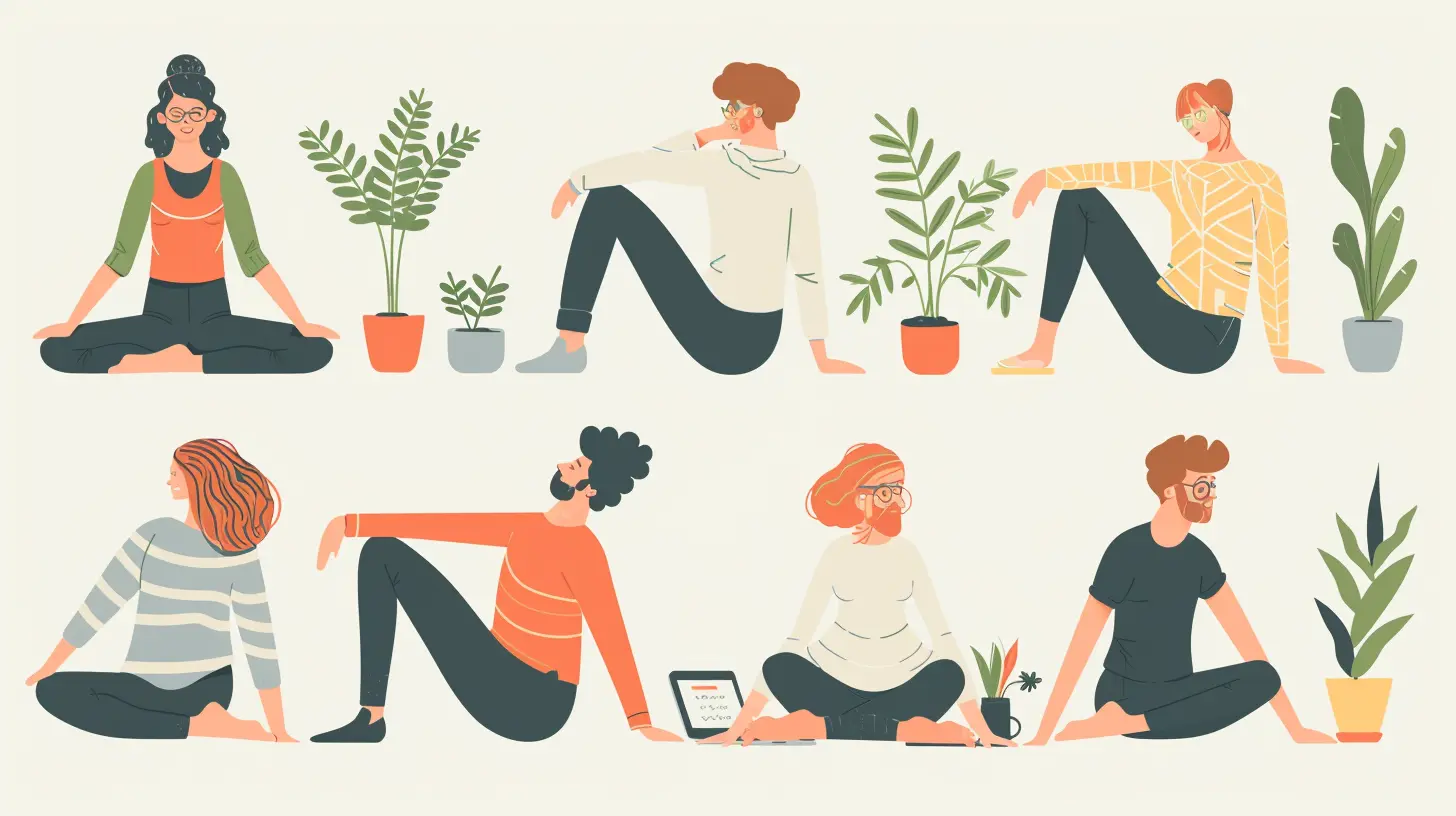
How Often Should You Stretch?
You don’t need an hour-long yoga session every day to reverse the effects of sitting. Honestly, just 5–10 minutes of stretching every few hours can make a world of difference.A good rule: Move or stretch every 30–60 minutes during your workday. Even just standing up and doing a quick reach or twist helps.
Want to go the extra mile? Mix in a little light walking or foam rolling before or after your stretches.
Tips to Stay Consistent
Let’s face it—building a new habit, even one as simple as stretching, is easier said than done. Here are a few ways to keep yourself on track:- Set phone reminders. Literally have your phone nudge you to stand and stretch.
- Pair it with a habit. Stretch while your coffee brews or during Zoom meetings.
- Keep it short. Don't overdo it. A few focused stretches are better than skipping entirely.
- Make it enjoyable. Put on music or use a stretching app to guide you.
Stretching vs. Exercise — What’s the Difference?
You might be wondering—can’t I just hit the gym after work and call it a day?Well, yes and no.
Exercise is obviously beneficial, but stretching targets specific imbalances that sitting causes. Strength training, walking, or running can't always undo those adaptations that build up over hours of being in a chair. You really do need both movement and focused flexibility.
Stretching fills the gap by ironing out tight spots and reactivating the parts of your body that go dormant during inactivity.
Final Thoughts
Look, sitting might be part of modern life, but that doesn’t mean you’re stuck with the consequences. Stretching is one of the simplest, most effective ways to fight back.You don’t have to overhaul your whole day or become a yoga guru. Just a few mindful minutes here and there can help unlock tight muscles, improve your posture, boost your energy, and get you moving like your body was designed to.
So next time you feel stuck at your desk or sluggish after a long workday, don’t just power through—pause and stretch. Your mind and body will thank you.
all images in this post were generated using AI tools
Category:
StretchingAuthor:

Nelson Bryant
Discussion
rate this article
2 comments
Nathaniel Summers
Great article! Stretching is such a simple yet effective way to combat the downsides of our sedentary lifestyles. I love how you highlighted the benefits not just for our bodies but also for our minds. I’m definitely inspired to incorporate more stretches into my daily routine. Thanks for the tips!
March 30, 2026 at 10:59 AM
Nelson Bryant
Thank you for your kind words! I'm glad you found the article inspiring. Enjoy incorporating more stretching into your routine!
Odessa Duffy
Stretching is the secret sauce! Feel revitalized and ready to conquer the day!
January 31, 2026 at 3:33 AM
Nelson Bryant
Absolutely! Stretching is essential for counteracting the negative effects of prolonged sitting. It boosts energy and prepares us for a productive day!