From Underdogs to Favorites: Teams to Watch in the 2026 Copa América
3 September 2026
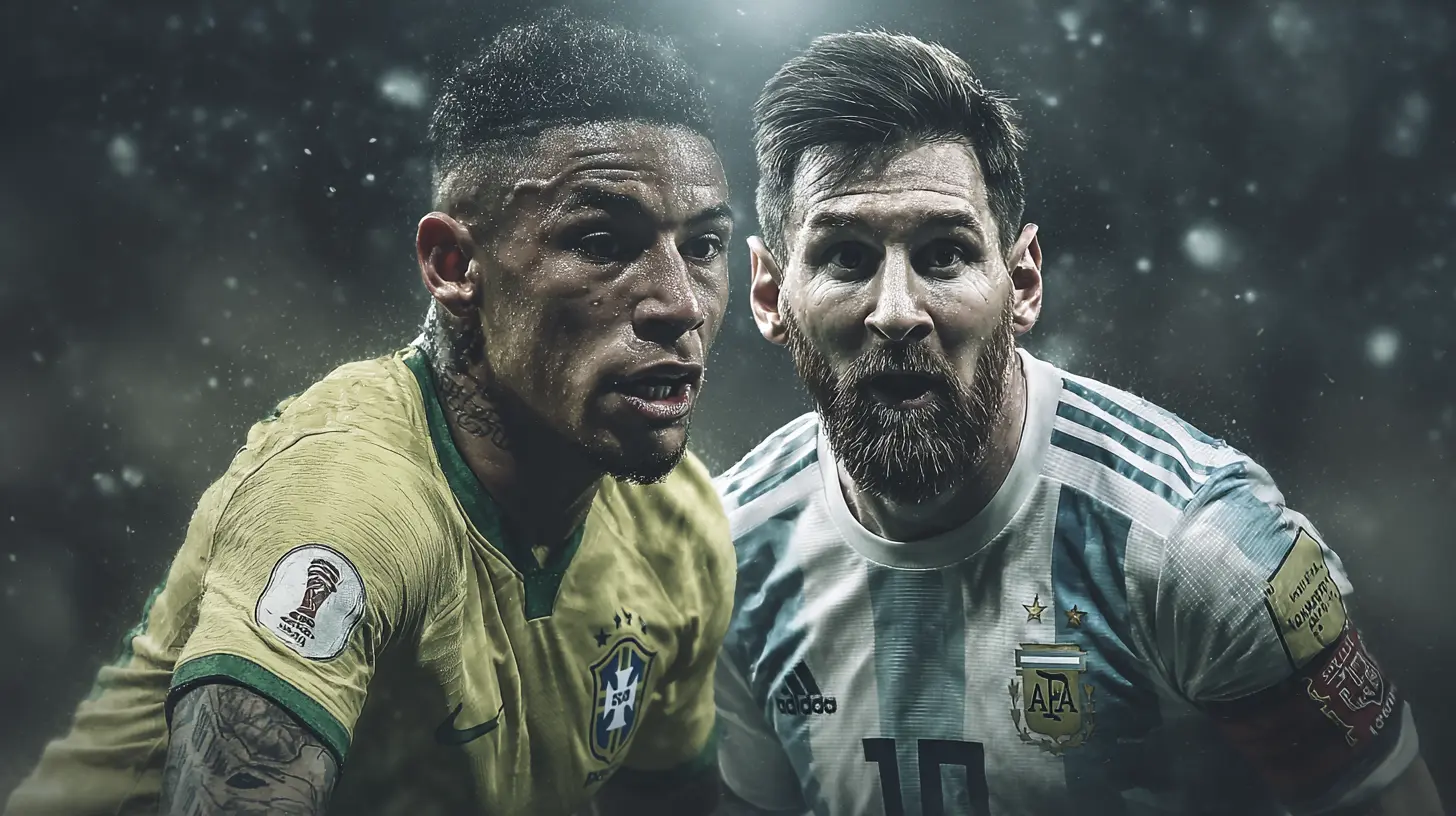
Let's be honest. Every four years, the same question gets asked: "Who is going to win the Copa América?" And every four years, the safe answer is Brazil or Argentina. It is easy. It is boring. And it ignores the real story. The 2026 tournament, hosted across the United States, is shaping up to be the most unpredictable edition in decades. The gap between the traditional giants and the chasing pack is shrinking. The days of automatic semifinal berths for the big two are fading. If you are only watching Argentina and Brazil, you are going to miss the actual football.
This is not a prediction piece based on vibes. This is a breakdown of the squads, the tactical shifts, and the psychological hurdles that will decide who rises and who crumbles. Some of these teams have been knocking on the door for years. Others are quietly building something special. All of them have a genuine shot at turning the tournament on its head. Here is the real analysis, without the hype.
The Shifting Power Structure in South America
The traditional hierarchy in CONMEBOL has always been simple: Brazil and Argentina at the top, Uruguay breathing down their necks, and everyone else fighting for scraps. That model is broken. The 2024 Copa América in the United States showed the world that the margins are razor thin. Colombia went undefeated for over two years. Uruguay knocked Brazil out in the quarterfinals. Ecuador pushed Argentina to the brink. This was not a fluke. It was a trend.Why is this happening? Several reasons. First, the coaching level across the continent has improved dramatically. The days of relying on raw talent and hoping for the best are over. Teams like Colombia and Ecuador now play with structured pressing schemes and clear build-up patterns. Second, the European club system is developing South American players earlier and more thoroughly. A 19-year-old from Montevideo or Medellín is now likely to have spent two years in a European academy before debuting for the senior national team. That tactical education is showing up on the international stage.
Third, and this is crucial, the physical demands of the modern game have leveled the playing field. Brazil and Argentina can no longer simply out-athlete their opponents. The smaller nations have caught up in fitness and conditioning. What used to be a talent gap is now a tactical chess match. And in a chess match, the underdog with a good plan always has a chance.
The Host Factor: Why the United States Matters
Before we dive into the teams, we have to talk about the elephant in the room. The 2026 Copa América is being played in the United States. That changes everything. The travel distances are enormous. The heat and humidity vary wildly from city to city. The pitches, for the most part, are grass but not the pristine surfaces these players are used to in Europe. And the crowds are different. In South America, the atmosphere is hostile and intimidating. In the U.S., it is more neutral, more tourist-friendly, and less predictable.For the traditional favorites, this is a trap. Brazil and Argentina are used to playing in front of their own fans or in neighboring countries. Playing in Dallas or Houston in front of a crowd that is 60 percent neutral fans removes that home advantage. For the underdogs, this is an opportunity. A neutral venue means a neutral mind. Ecuador does not have to worry about a hostile crowd in Lima or Buenos Aires. They just have to play football.
The U.S. crowds also tend to favor the attacking team. They want goals. They want excitement. This could lead to more open games, which suits teams with pace and directness. It also means that defensive, low-block teams might get booed off the pitch. That psychological pressure is real. A team like Paraguay, which traditionally parks the bus, might find the atmosphere turning against them if they sit back for 90 minutes.
The Real Contenders Beyond the Big Two
Colombia: The Perennial Dark Horse That Is No Longer Dark
Colombia has been the bridesmaid of South American football for too long. They have the talent. They have the passion. What they have lacked is the killer instinct in the knockout rounds. That changed under Néstor Lorenzo. Since taking over, he has instilled a belief that was missing for years. The 2024 run to the final, where they fell to Argentina in extra time, was not a moral victory. It was a statement.What makes Colombia dangerous in 2026 is their midfield depth. They have a mix of youthful energy and veteran composure. The key player is not necessarily the star striker. It is the pivot midfielder who controls the tempo. Colombia's ability to switch from a patient possession game to a rapid counter-attack is unmatched in the region. They do not panic when they go behind. They do not get overconfident when they go ahead. That emotional stability is rare.
The trade-off for Colombia is their reliance on a small core of players. If one or two key starters get injured, the drop-off is significant. Their bench is improving, but it is not at the level of Brazil or Argentina. They also have a tendency to start tournaments slowly. In 2024, they were not impressive in the group stage. They grew into the competition. That is a risky strategy in a short tournament. One bad game in the group stage can set up a nightmare quarterfinal matchup. Expect them to be more focused from the first whistle this time around.
Uruguay: The Chaos Agents
Uruguay are not underdogs in the traditional sense. They have won the Copa América 15 times. But they are often overlooked in the modern conversation because they do not have the flashy stars of Brazil or Argentina. That is a mistake. Under Marcelo Bielsa, Uruguay have become the most entertaining and chaotic team in South America. They press like maniacs. They attack with reckless abandon. And they do not care about the scoreline. They just want to run you into the ground.This style is both their greatest strength and their biggest weakness. When it works, as it did in the 2024 Copa América, they look unstoppable. They suffocate opponents and create chance after chance. When it does not work, they leave massive gaps at the back and can be caught out on the counter. Bielsa has never been a coach who adapts. He has a philosophy, and he sticks to it. In a tournament setting, that can be fatal. If they face a team that is willing to sit deep and absorb pressure for 90 minutes, Uruguay could run out of ideas.
The other issue is fatigue. Bielsa's training methods are notorious for their intensity. By the end of a long season, his players are often running on fumes. The 2026 tournament comes at the end of the European season. If Uruguay's key players are already tired, the high-press style will not work. Watch their fitness levels in the group stage. If they look sluggish in the first two games, they will not make it past the quarterfinals.
Ecuador: The Silent Builders
Ecuador have quietly become one of the most organized teams in the region. They do not have the star power of a Colombia or Uruguay, but they have a system. They are defensively solid, tactically disciplined, and dangerous on the break. Their qualifying campaign for the 2026 World Cup was impressive, losing only a handful of games and conceding very few goals.The key to Ecuador's success is their youth development. They have invested heavily in academies and are now reaping the rewards. Their squad is full of players who have come through the same system, which means they understand each other's movements instinctively. This is not a team of individuals. It is a collective unit.
The weakness is in attack. Ecuador struggle to score goals against teams that park the bus. They create chances, but they lack a clinical finisher. If they can find a striker who can convert even half of the opportunities they create, they become a genuine threat to win the whole thing. If not, they will be stuck in the cycle of impressive performances followed by frustrating eliminations.
The United States: The Hosts with a Point to Prove
This is where it gets interesting. The United States are not a CONMEBOL team, but they are hosting the tournament. And they are not just participating to make up the numbers. The U.S. men's national team has been on a steady upward trajectory for a decade. The 2026 World Cup is on home soil, and this Copa América is a dress rehearsal. They will be desperate to prove they can compete with the South American elite.The U.S. have a generation of players who are playing at top European clubs. They have pace, power, and technical ability. What they have lacked in the past is a football intelligence. Too often, they rely on athleticism to bail them out of tactical mistakes. In a tournament like this, against teams that are tactically superior, that will not work.
The home crowd will be a huge advantage. The U.S. fans are loud, passionate, and will pack the stadiums. But there is also immense pressure. The expectations are high. If they lose to a smaller nation in the group stage, the backlash will be severe. The coaching staff needs to find a balance between attacking ambition and defensive solidity. They cannot just run at teams for 90 minutes. They need a plan.
The Tactical Trends That Will Define the Tournament
The Death of the False Nine
For a decade, the false nine was the trendy tactic. Teams would play without a traditional striker, using a midfielder in the forward position to drop deep and create overloads. That trend is fading. The modern game is about verticality and directness. Teams want a focal point in the box. They want someone to hold up the ball and bring others into play.This is good news for teams like Brazil and Argentina, who have traditional number nines at their disposal. It is bad news for teams that tried to adapt to the false nine trend and now have no natural goalscorer. The teams that can adapt to this shift will thrive. The teams that cannot will struggle.
The Midfield Battle Is Everything
In the 2024 Copa América, the teams that won the midfield battle won the game. It sounds obvious, but the way it played out was significant. The winning teams did not just have more possession. They had better positioning. They knew when to press and when to drop off. They controlled the tempo of the game.Expect to see more teams playing with a double pivot in midfield. This provides defensive stability and allows the fullbacks to push forward. The trade-off is that you lose a creative player in the final third. Coaches will have to decide whether to sacrifice defensive cover for attacking flair. There is no right answer. It depends on the squad and the opponent.
Set Pieces Are Not a Dirty Word
Nobody wants to admit they practice set pieces. It is seen as a lesser art. But in a tight tournament, set pieces win games. A corner kick, a free kick, a long throw-in. These are the moments that decide matches. The teams that have a clear plan for these situations have a huge advantage.Look for teams that have specialized set-piece coaches. This is a growing trend in European football and is slowly making its way to South America. The team that scores from a set piece in a quarterfinal will not care about the aesthetics. They will just be happy to advance.
Common Misconceptions About Tournament Favorites
Myth Number One: The Best Squad Always Wins
This is completely false. The best squad does not win tournaments. The best team does. And a team is not just a collection of players. It is a cohesive unit with a clear identity and a shared purpose. France had the best squad at the 2022 World Cup and lost in the final. Argentina had a good squad, but not the best, and they won. The difference was chemistry and belief.Myth Number Two: Experience Always Trumps Youth
Experience is valuable, but it can also be a burden. Older players are often set in their ways. They are less willing to adapt to new tactics. Younger players are more eager to learn and more willing to run. The ideal squad has a mix of both. Too much youth leads to inconsistency. Too much experience leads to stagnation.Myth Number Three: Playing at Home Is Always an Advantage
This is not true. Playing at home can add pressure. The fans expect you to win. The media scrutinizes your every move. The fear of failure can paralyze a team. Some teams thrive on this pressure. Others crumble under it. The key is how the coaching staff manages the external noise. If they can keep the players focused on the game, the home advantage is real. If not, it becomes a burden.
The Psychological Battle: Handling the Pressure
The 2026 Copa América will be a mental test as much as a physical one. The tournament is long. The travel is exhausting. The media coverage is intense. The teams that can manage their emotions will have a significant edge.For the underdogs, there is no pressure. Nobody expects them to win. They can play with freedom and abandon. This is dangerous for the favorites. A team with nothing to lose is the most dangerous opponent you can face.
For the favorites, the pressure is immense. Every game is a must-win. Every mistake is magnified. The key is to focus on the process, not the outcome. The teams that can do that will be the ones holding the trophy at the end.
The Realistic Predictions (With a Health Dose of Caution)
If you are looking for a safe bet, Argentina are the favorites. They have the best player in the world, a solid tactical system, and a winning mentality. But they are aging. The core of their squad is on the wrong side of 30. Can they maintain their intensity for a full tournament? It is a big question.Brazil are always a threat. They have an embarrassment of riches in attack. But their defense has been shaky, and their midfield lacks a clear leader. They could win the whole thing, or they could crash out in the quarterfinals. Nobody knows.
Colombia are the smart pick. They have the balance of youth and experience, a clear tactical identity, and a point to prove. They are not the underdogs anymore. They are legitimate contenders. And that is exactly the position they want to be in.
Uruguay are the wild card. They could beat anyone on their day. They could also lose to anyone. It all depends on whether Bielsa's system holds up over the course of a month.
Ecuador are the dark horse. They are not flashy, but they are effective. If they find a goalscorer, watch out.
The United States are the unknown. They have the talent and the home crowd. But they do not have the tournament experience. If they can get past the group stage, they become a real threat.
Final Thoughts: Watch the Games, Not the Rankings
The 2026 Copa América is not going to be a coronation for Argentina or Brazil. It is going to be a battle. The underdogs are no longer satisfied with moral victories. They want to win. And they have the tools to do it.Do not make the mistake of writing off the smaller nations. Do not assume the favorites will roll over the opposition. Do not believe the hype. Watch the games with an open mind. You will see that the gap between the top and the rest is smaller than ever. And that is what makes this tournament so exciting.
The teams that adapt, that stay healthy, and that keep their heads will be the ones lifting the trophy. It is not about the name on the front of the shirt. It is about what happens on the pitch. And in 2026, anything can happen.
all images in this post were generated using AI tools
Category:
Upcoming TournamentsAuthor:

Nelson Bryant
Discussion
rate this article
1 comments
Cassian McDonald
It's exciting to see these underdogs rising! Each team's journey adds so much depth to the tournament. Looking forward to the matches ahead!
September 11, 2026 at 7:28 PM
Nelson Bryant
Absolutely! The stories behind these teams make the tournament even more thrilling. Can't wait for the action to unfold!