Achieving the Triple Crown in 2026: A Career-Defining Moment
29 October 2026
There is a specific kind of silence that falls over a stadium when history is in the air. It is not the silence of boredom or a lopsided score. It is the silence of forty thousand people holding their breath at the same time, aware that they are watching something that will be talked about for decades. That is the atmosphere that surrounds the pursuit of a Triple Crown.
In horse racing, the Triple Crown means winning the Kentucky Derby, the Preakness Stakes, and the Belmont Stakes in a single season. Thirteen horses have done it. The last was Justify in 2018. The gap between Affirmed in 1978 and American Pharoah in 2015 lasted thirty-seven years, a drought so long that an entire generation of racing fans grew up believing the feat might be cursed. Then two horses did it in four years, and the conversation shifted. People stopped asking whether the Triple Crown was possible and started asking when the next one would arrive.
That question has a specific answer on the calendar now. The 2026 Triple Crown will run through Churchill Downs, Pimlico, and Belmont Park, and the conditions surrounding it are unusual enough that the pursuit deserves serious analysis rather than wishful speculation. This article is about what it actually takes to win all three races in 2026, why the modern Triple Crown is harder than the history books suggest, and how the people closest to a contender should think about the decisions that will define a career.
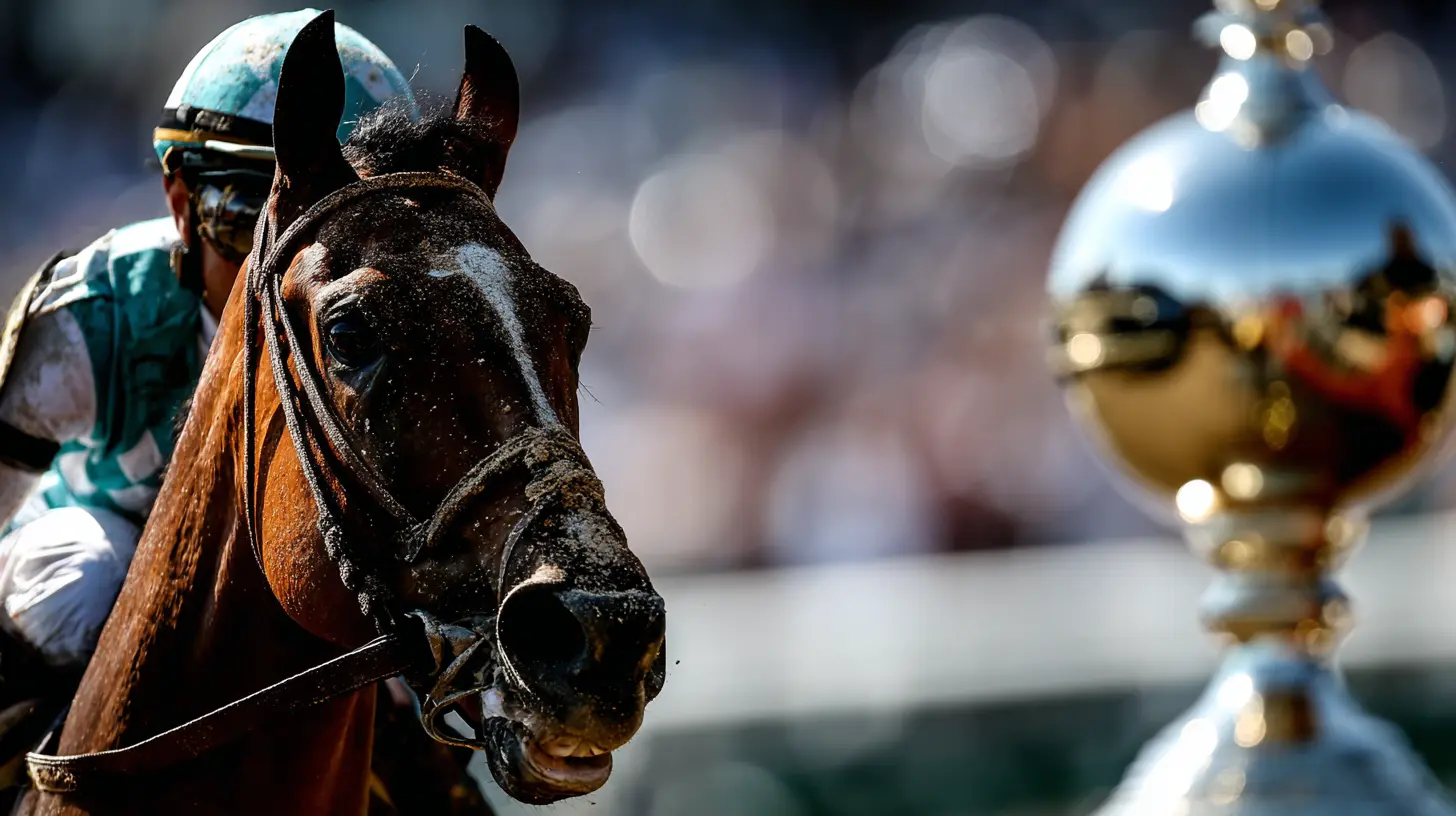
Why the Triple Crown Is Harder Now Than It Used to Be
The romantic version of the Triple Crown story says that great horses win because they are great. The practical version says that great horses win because their connections manage a five-week gauntlet better than everyone else. The modern version adds a third layer: the five-week gauntlet is now compressed, scrutinized, and scheduled in ways the legends never had to navigate.The compression problem
The Kentucky Derby is run on the first Saturday in May. The Preakness follows two weeks later. The Belmont comes three weeks after that. Three races at a mile and a quarter, a mile and three sixteenths, and a mile and a half, all within thirty-six days, against the best three-year-olds in the country.That schedule is brutal in a way that is easy to underestimate. A young horse coming off a spring campaign has typically raced two or three times in the months before the Derby. The Triple Crown asks for three maximum efforts in five weeks, each at a distance the horse has never run before or has run only once. The physical toll is real. The mental toll is real. The logistical toll on grooms, exercise riders, and trainers is real.
Compare this to the careers of older horses, who might race six or eight times a year with four to six weeks between starts. The Triple Crown is an outlier in modern racing, a throwback to an era when horses raced far more frequently and the sport treated durability as a given. It is not a given anymore. Breeding has shifted toward speed and precocity, and the modern Thoroughbred is often asked to do something its pedigree did not prepare it for.
The field quality problem
Winning the Derby requires beating nineteen other horses. Winning the Preakness requires beating a field that includes the Derby winner, the Derby runner-up, and a handful of fresh shooters who skipped Louisville. Winning the Belmont requires beating whoever survived the first two legs plus a new wave of horses who targeted the Belmont specifically.Each leg has a different tactical shape. The Derby is a cavalry charge with a twenty-horse field, traffic, and a pace that can collapse or crawl. The Preakness is a smaller field on a tighter track with a shorter stretch, which rewards a different kind of horse. The Belmont is a stamina test on the longest dirt track in North America, and it has broken the hearts of many horses who looked unbeatable in May.
A Triple Crown winner has to be versatile enough to win three different kinds of races. That is the part the casual fan misses. It is not just about being fast. It is about being fast in three different tactical environments, on three different surfaces, against three different field compositions, with only two weeks to recover between each test.

The 2026 Calendar and What It Changes
The 2026 Triple Crown will be run under the same basic structure as recent years, but the specifics matter. The Belmont Stakes has been in flux in recent seasons due to construction at Belmont Park, and the 2026 edition is expected to return to the traditional Belmont Park configuration. That matters more than it sounds.Why the Belmont venue matters
Belmont Park's main dirt track is a mile and a half in circumference, the largest in North America. The Belmont Stakes is run at a mile and a half, one full lap. The long backstretch and the sweeping far turn allow horses to find a rhythm that is impossible on tighter tracks. The stretch is 1,097 feet long, which means a horse can be five lengths back at the quarter pole and still win. It also means a horse can be five lengths in front at the quarter pole and still lose.Horses who win the Belmont tend to share a profile: they can relax early, they have a high cruising speed, and they have the stamina to keep going when the field turns for home. The Belmont is not a sprint. It is a test of who can still run at the end.
If the 2026 Belmont is run at Belmont Park as expected, the traditional dynamics apply. That is good news for horses with stamina-oriented pedigrees and bad news for horses who won the Derby on pure speed.
The Preakness variable
Pimlico Race Course has been the subject of long-running renovation discussions, and the 2026 Preakness is expected to be run at Pimlico under the current plan. The track is tight, the turns are sharp, and the stretch is shorter than Churchill Downs. Post position matters more at Pimlico than at Churchill or Belmont. A horse drawn wide in a small field can overcome it. A horse drawn wide in a large field on a tight track has a problem.The Preakness also tends to attract a smaller field than the Derby, which changes the pace dynamics. A six-horse Preakness can turn into a tactical chess match. A ten-horse Preakness can turn into a stampede. The Derby winner has to adapt to whatever shape the race takes, often with only two weeks to prepare.
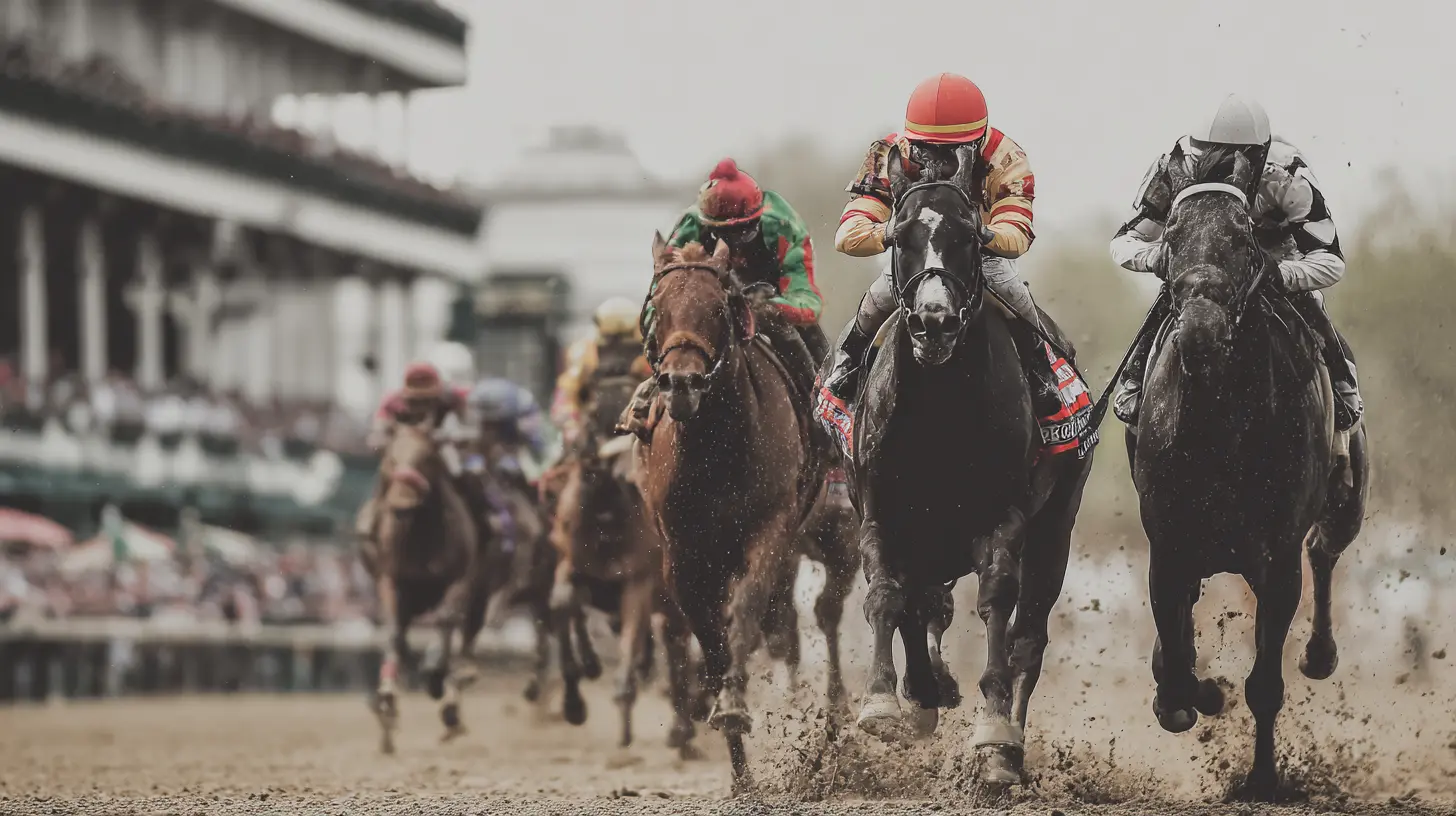
The Anatomy of a Triple Crown Contender
Not every Derby winner is a Triple Crown candidate. Some win the Derby because the pace collapsed in front of them. Some win because they got the perfect trip. Some win because they are genuinely the best horse in the field but do not have the stamina profile for the Belmont.A true Triple Crown contender has to check several boxes at once. Understanding those boxes is the difference between a hopeful and a plan.
Stamina on the dam's side
The single most predictive factor in a horse's ability to get a mile and a half is the female family. A horse can inherit speed from its sire, but stamina almost always comes from the dam. Look at the pedigrees of recent Triple Crown winners and you will find mares who won at a mile and a quarter or produced horses who did. The sire gets the headlines. The dam gets the Belmont.This is not a hard rule. It is a strong tendency, and it matters most when the Derby winner is being asked to stretch out to a mile and a half for the first time. A horse whose dam's family is full of milers is a risky Belmont bet regardless of how impressive the Derby win looked.
Tactical versatility
A Triple Crown contender has to be able to win from more than one position. The Derby might require a closing move. The Preakness might require pressing the pace. The Belmont might require an early move or a patient one. A horse who can only win one way is vulnerable to a race shape that does not suit it.The best Triple Crown horses are not necessarily the fastest horses in any single race. They are the horses who can adjust. They rate. They relax. They respond when asked. They do not panic in traffic. They do not fight their rider.
Recovery capacity
Two weeks between the Derby and the Preakness is not a lot of time. Some horses bounce back quickly. Some do not. The ones who do tend to share a few traits: they are light on their feet, they eat well after a race, they recover their weight quickly, and they have a temperament that does not carry stress.Trainers talk about this in terms of "condition" and "bloom," but the practical version is simpler. Watch how a horse acts in the days after the Derby. If it is bright-eyed, eating, and moving well, the Preakness is on the table. If it is dull, off its feed, or stiff, the conversation changes. The decision to run in the Preakness is often made in the barn, not on the track.

The Decisions That Define a Triple Crown Run
The Triple Crown is not won in May and June alone. It is won in the months of planning that precede it, and it is lost in the small decisions that get made under pressure.The prep schedule
Most Derby contenders run two or three prep races in the winter and early spring. The choice of which preps to run, and how hard to push in each one, has a direct impact on what the horse has left in the tank for the Triple Crown.There is a trade-off here that does not get enough attention. A horse who runs a hard race in the Florida Derby or the Santa Anita Derby may be more battle-tested, but it may also be more fatigued. A horse who wins a prep easily may be fresher, but it may also be less prepared for the chaos of a twenty-horse Derby field.
The best trainers treat the preps as a progression. They want the horse peaking on the first Saturday in May, not before. They want the final prep to be a strong effort but not an all-out one. They want the horse entering the Derby on the way up, not at the top of its arc.
The Derby trip
The Derby is a twenty-horse race, and the trip matters enormously. A horse who gets stuck in traffic, who loses ground on the turn, or who is asked to make a move at the wrong time may win anyway if it is good enough, but it will pay for it in the Preakness.This is why post position draws get so much attention. It is also why jockey decisions in the first quarter mile matter more than they do in almost any other race. A Triple Crown contender needs a jockey who can find a clean path without using up the horse. That is a skill that is hard to quantify but easy to recognize when you see it.
The Preakness decision
The decision to run in the Preakness is the first real fork in the road. Some Derby winners skip it. Some run and lose. Some run and win and go on to the Belmont.The case for running is straightforward. The Preakness is a classic. It is the second leg of the Triple Crown. Winning it keeps the dream alive. The case against running is also straightforward. Two weeks is a short turnaround. A hard race in the Preakness can compromise the Belmont. A horse who is not fully recovered can regress.
The right answer depends on the horse. There is no universal rule. A trainer who knows the horse, who has watched it every day for months, is in the best position to make the call. The mistake is making the decision based on what the public wants or what the schedule demands rather than what the horse is telling you.
The Belmont decision
The Belmont is the final test, and it is the one where the distance question becomes unavoidable. A horse who has never run beyond a mile and a quarter is being asked to run a mile and a half against fresh horses who have been pointed at this race for months.The decision to run in the Belmont is usually not a decision at all if the horse has won the first two legs. The Triple Crown is on the line. You run. But the preparation matters. The training between the Preakness and the Belmont is a delicate balance between maintaining fitness and preserving stamina. Too much work and the horse is flat. Too little and the horse is short.
Common Mistakes and Misconceptions
The Triple Crown attracts more mythology than almost any other event in sports. Some of that mythology is harmless. Some of it leads people to make bad decisions.The "best horse always wins" misconception
The best horse does not always win the Triple Crown. The best horse often wins one or two legs. The Triple Crown requires the best horse to also be the most durable, the most versatile, and the most fortunate. That combination is rare.This matters because it changes how you evaluate a contender. A horse who wins the Derby impressively is not automatically a Triple Crown candidate. A horse who wins the Derby narrowly is not automatically out of it. The question is not "how good is this horse" but "how well does this horse's profile fit the three races."
The "fresh horse" fallacy
Every year, someone argues that a fresh horse who skipped the Derby or the Preakness has an advantage in the Belmont. Sometimes that horse wins. More often, it does not. The Triple Crown campaign is a specific kind of fitness, and horses who have been through it are often sharper than horses who have been pointed at one race.The fresh horse argument has merit in specific cases. A horse who is genuinely talented and has been brought along slowly can be dangerous in the Belmont. But the idea that freshness is an automatic advantage is a misconception. Fitness matters. Rhythm matters. Race experience matters.
The "pace makes the race" oversimplification
Pace is important in every race, but the Triple Crown is not just about pace. It is about stamina, recovery, tactics, and luck. A horse who gets the perfect pace setup in the Derby may not get it in the Preakness. A horse who benefits from a hot pace in the Preakness may face a slow pace in the Belmont.The best Triple Crown horses are the ones who can win regardless of pace. They are not dependent on a specific race shape. They make their own luck.
What a 2026 Triple Crown Would Mean
If a horse wins the Triple Crown in 2026, it will be the third since 2015 and the fourteenth overall. That would mark a shift in how the feat is perceived. The thirty-seven-year drought made the Triple Crown feel almost impossible. Two winners in four years made it feel achievable again. A third in eleven years would make it feel like something the sport can produce with some regularity, which would change the way owners, breeders, and trainers approach the campaign.It would also change the economics. A Triple Crown winner is worth more as a stallion than any other horse in the world. The breeding rights alone can be worth tens of millions of dollars. The prestige is immeasurable. The horse becomes part of history in a way that no other achievement in the sport can match.
But the career-defining moment is not just about money or fame. It is about the people around the horse. The trainer who spent years building a program. The groom who slept in the barn. The exercise rider who knew the horse's mood before anyone else. The owner who took the risk. The jockey who made the right call in the moment that mattered.
The Triple Crown is a team achievement disguised as an individual one. That is part of what makes it so compelling.
Practical Advice for People Close to a Contender
If you are fortunate enough to be involved with a horse who has a realistic shot at the 2026 Triple Crown, the advice is simple but not easy.First, be honest about the horse's profile. Do not let hope override evidence. If the pedigree does not support a mile and a half, acknowledge it. If the horse has a history of tying up or recovering slowly, factor it in.
Second, plan the campaign backward from the Belmont. The Derby and the Preakness are not the goal. They are the path. The goal is to have a horse who is still running at the end of the Belmont. That means managing the preps, the travel, and the training with the final race in mind.
Third, listen to the horse. Horses do not read the schedule. They do not care about the Triple Crown. They care about how they feel. A trainer who can read those signals is worth more than any spreadsheet.
Fourth, accept that luck plays a role. The Triple Crown is not a pure meritocracy. Post positions, pace scenarios, and traffic can decide races. You can control preparation. You cannot control everything else.
The Bottom Line
Achieving the Triple Crown in 2026 is a career-defining moment because it requires everything to go right at once. It requires a horse with the right pedigree, the right temperament, and the right training. It requires a team that makes good decisions under pressure. It requires a little luck.The history of the Triple Crown is a history of near misses. Spectacular Bid stepped on a safety pin. Real Quiet lost by a nose. Charismatic broke down in the stretch. Smarty Jones was caught in the final yards. California Chrome was bumped at the start. Those horses were good enough to win. They did not.
The 2026 edition will produce its own near misses and its own heroes. The question is whether one of them will join the list of thirteen. The answer will not be known until the field turns for home at Belmont Park on a June afternoon, with the crowd on its feet and history in the air.
That is the moment. That is what the Triple Crown is. Everything else is preparation.
all images in this post were generated using AI tools
Category:
Career MilestonesAuthor:

Nelson Bryant